
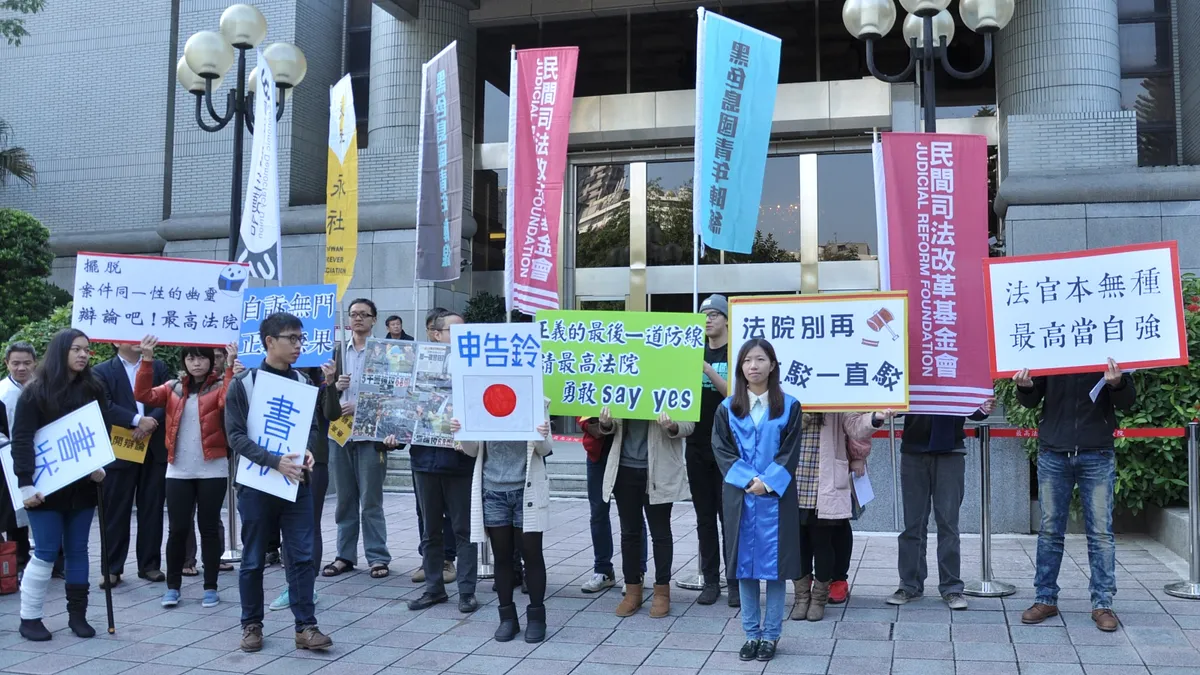
JRF Statement on the Supreme Court's Dismissal of Wang Hsin-kai's Appeal (March 24 Executive Yuan Violent Clearance Private Prosecution)
Last edited: 2026-08-26
In the early morning of March 24, the state used police force to violently clear citizens peacefully assembling at the Executive Yuan. With the assistance of pro bono lawyers, the victims successively filed private prosecutions with the Taipei District Court. Among them, Dr. Wang Hsin-kai, who filed his private prosecution later, unexpectedly had it dismissed outright by both the District Court and the High Court. The pro bono legal team appealed to the Supreme Court, which unexpectedly dismissed the appeal today (January 22). The Foundation deeply regrets this outcome and issues the following statement:
For a major private prosecution affecting the right of access to the courts of more than 40 victims, the Supreme Court neither conducted open oral arguments nor spent sufficient time, "speedily" dismissing the appeal in less than three weeks and closing the case hastily.
The Supreme Court's wrongful dismissal of the appeal ignored the fact that these cases were not the same case, stripping victims of their right of access to the courts simply because they filed their private prosecutions later. In effect, it has shielded the perpetrators of state violence. The pro bono legal team will petition the Grand Justices for a constitutional interpretation and will absolutely not relinquish its resolve to pursue accountability for state violence.
The Supreme Court has consistently lacked a constitutional perspective in its interpretation of the law, summarily dismissing cases without regard for the people's right of access to the courts, which has repeatedly drawn criticism. Echoing the previous joint petition signed by more than half of the nation's judges, reform of the Supreme Court can no longer be delayed!
Press Contact
Deputy Executive Director of the Judicial Reform Foundation, Attorney Chen Yu-fan 02-2523-1178
This article is an AI-generated translation of the original Chinese text. In the event of any discrepancy, the Chinese version shall prevail.
