
Gazing at Human Frailty, Recognizing the Evil of Torture: June 26 International Day in Support of Victims of Torture | Bearing Witness to Torture Survivors
Last edited: 2026-11-04
Torture is a punishment that inflicts severe physical or mental suffering, taking many forms from tangible to intangible, verbal to physical. Frequently used to punish suspects or extract intelligence and confessions, torture stops at nothing to achieve its ends and is easily abused by those in power.
Article 7 of the International Covenant on Civil and Political Rights (ICCPR), which has acquired domestic legal status in Taiwan, explicitly stipulates the "prohibition of torture or cruel, inhuman punishment." At the end of February during the international review of Taiwan's human rights reports under the two Covenants, former UN Special Rapporteur on Torture Manfred Nowak strongly disagreed with Taiwan's national report claiming that "torture has vanished in Taiwan, and we have no issues with interrogation under duress." Instead, he pointed out that such self-complacency among officials only reveals their ignorance of the phenomenon of torture, making it all the more concerning. Taiwan's judicial authorities have repeatedly ignored the existence of torture, continuing to rely on coerced false confessions as the basis for judgments, with clear and documented evidence as follows:
The Chiang Kuo-ch'ing Case
In 1996, Chiang Kuo-ch'ing, a private serving in the Air Force Operations Command, was suspected of involvement in the sexual assault and murder of a young girl. In its eagerness to claim credit for solving the case, the military employed illegal interrogation methods to extract a confession, leading to a wrongful death sentence. It was not until 2011 that he was exonerated and the state admitted to the wrongful execution, yet no criminal accountability was pursued against the personnel who committed illegal acts and dereliction of duty in this case.
The Chiou Ho-shun Case
In 1987, the Hsinchu kidnapping case of schoolchild Lu Cheng shocked society. The Taipei City Police Department arrested Chiou Ho-shun and 11 other defendants, and accused Chiou Ho-shun and his co-defendants of committing another dismemberment murder case involving female insurance agent K'o Hung Yu-lan in Miaoli County. However, the prosecutors' accusations in both cases relied solely on confessions without direct physical evidence, and the defendants were forced to admit to the crimes under torture and coercion. In 1994, Control Yuan Member Wang Ch'ing-feng discovered police torture audio from police interrogation tapes and resolved to impeach the prosecutors and police personnel involved in the Lu Cheng case. Ultimately, four police officers were definitively convicted for torture. Nevertheless, although it was proven that Chiou Ho-shun and the others had been subjected to torture and the cases lacked direct evidence, the courts still found all defendants guilty and sentenced Chiou Ho-shun to death in 2011.
The Cheng Hsing-tse Case
In the 2002 Fengyuan KTV shooting case in Taichung, Cheng Hsing-tse was accused of crimes including police murder and was definitively sentenced to death in 2006. However, there was no scientific evidence whatsoever that Cheng Hsing-tse fired a gun, and his fingerprints were not even found on the murder weapon. According to medical records, Cheng Hsing-tse only sustained a gunshot wound to his left calf when arrested, yet after being interrogated at the police station, he developed injuries such as bruising around his left eye and bruises on the outer thigh, and video footage from the police station clearly showed swelling around Cheng Hsing-tse's eyes. According to Cheng Hsing-tse's own account, the police torture methods included waterboarding, electric shock, and kicking or striking his fractured wound. Under harsh interrogation and duress, Cheng Hsing-tse was forced to make a false confession, yet the court ignored the discrepancies between the confession and other evidence, still using the confession as the basis for the death sentence.
The Hsieh Chih-hung Case
In the year 2000 in Kueijen Township, Tainan, a case occurred where a woman and a man were stabbed to death with sharp weapons. The police successively arrested Kuo Chün-wei and Hsieh Chih-hung, and seized the murder weapon and the victims' mobile phones at Kuo Chün-wei's home. There were no fingerprints belonging to Hsieh Chih-hung on the murder weapon, and the police could not find any blood reactions from the victims on Hsieh Chih-hung's clothing or scooter; there was no scientific evidence whatsoever showing that Hsieh Chih-hung committed the murder. Hsieh Chih-hung made three interrogation records at the police station. During the first police questioning, without a lawyer present, Hsieh Chih-hung confessed to murdering the two deceased individuals and to sexual assault. During the second police questioning, Hsieh Chih-hung retracted his statement and claimed there was no sexual assault; halfway through, Hsieh Chih-hung's defense counsel appeared and requested that the record be retaken. The third police questioning, conducted in the presence of his lawyer, contained no confession, and Hsieh Chih-hung stated his innocence. Outside of police surveillance, before prosecutors and the court, Hsieh Chih-hung never confessed again and stated that he had been tortured by the police. Subsequently, although prosecutors and police verified that Hsieh Chih-hung had not actually committed sexual assault, he had admitted to it in his first record. This police interrogation confession should have been the result of torture, yet the courts at every instance in this case refused to believe it. The Supreme Court had requested that the police interrogation audio be examined, but the tapes were lost, making it impossible to restore the circumstances of the first police interrogation. Ultimately, the courts still deemed the torture defense invalid, concluded that Hsieh Chih-hung's first confession was reliable, and Hsieh Chih-hung's death sentence was definitively finalized in 2011.
These concrete cases directly point to the fact that torture has never completely disappeared in Taiwan. Over the past decade or more, cases rescued by judicial reform and human rights organizations have continually exposed that torture is a cog in the production line of wrongful convictions. Law enforcement officers, in their eagerness to "solve cases" quickly, coerce confessions from suspects through torture, which ironically allows the real perpetrators to go free while innocent people suffer, leaving victims even further from the full truth of the facts.
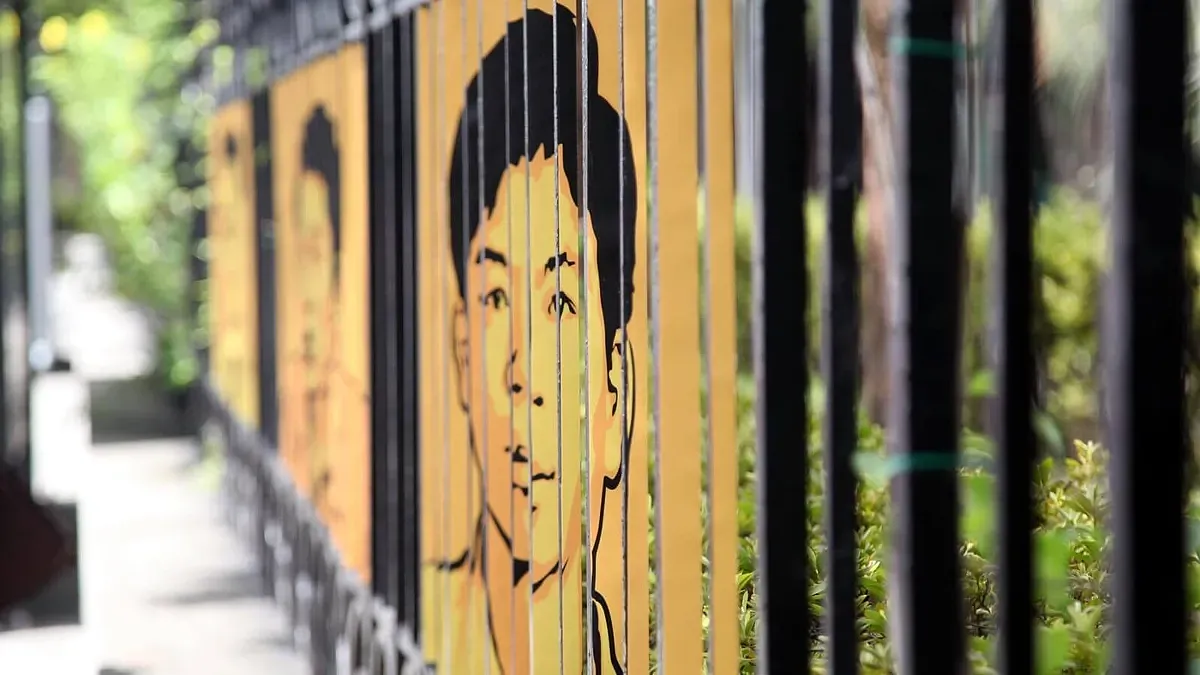
On June 26, 1987, the United Nations Convention against Torture officially entered into force. To commemorate this convention, the United Nations designated this day as the International Day in Support of Victims of Torture. Currently, 153 countries worldwide have become parties to the treaty, and civil society organizations initiate actions on this day every year to condemn torture and show solidarity with victims. This year, Taiwan is synchronizing with the global community for the first time to hold International Anti-Torture Day events, using this opportunity—through street art, forums, and films—to bring the issue of torture, which people were previously unwilling to face squarely, into the view of the general public.
In a civilized society governed by the rule of law, torture is an immoral and cruel abuse of power and is by no means a way to solve problems. In the concluding observations of the international review of the two Covenants, experts emphasized that Taiwan should ratify the Convention against Torture as soon as possible and establish a National Preventive Mechanism under the Optional Protocol to the Convention against Torture. We hope that Taiwanese society can squarely face the issue of torture, and establish a comprehensive set of complementary measures for torture victims, including prompt judicial remedies, monetary compensation, psychological rehabilitation, and social reintegration. Furthermore, the government has a special responsibility to investigate and hold accountable law enforcement officers who have previously practiced torture to extract confessions, deterring the condoning phenomenon of "impunity" so that torture can truly disappear from Taiwan as early as possible!
Organizers
Taiwan Association for Human Rights, Judicial Reform Foundation, Amnesty International Taiwan Section, Humanistic Education Foundation, Taiwan Alliance to End the Death Penalty, Taiwan Association for Innocence, Covenants Watch, Taiwan Association for Prison Reform
Media Contact
Tsai Chi-hsun, Secretary-General, Taiwan Association for Human Rights
This article is an AI-generated translation of the original Chinese text. In the event of any discrepancy, the Chinese version shall prevail.
