
Mourning a Prosecutor of Unwavering Righteousness and Dedication—Chen Ching-hsiang
Last edited: 2026-08-30
Photo Source / Taiwan Heart
Around 10 a.m. that day (June 17, 2015), Prosecutor Tang Hsien-heng called to ask how Chen Ching-hsiang was doing. I replied that he was still hospitalized. I then asked why he was asking, and he said he saw someone write on Chen Ching-hsiang's Facebook page: "You will forever live in our hearts." Tang Hsien-heng chimed in that as long as he was fine, words like "you will forever live in our hearts" shouldn't be thrown around carelessly. I agreed, saying he was still in the hospital, so why would anyone leave such a message.
Yet less than 30 minutes later, I received a tearful call from my wife saying: "Big Brother Chen (Ching-hsiang) passed away in the early hours of this morning"…
Although we knew cancer could take lives, it came far too quickly and too suddenly. How could anyone accept it when he was hospitalized for a mere 40 days in total and just left like that? Couldn't you have stayed a little longer to accompany your family? To let your old friends cycle around Taiwan with you again? To stand shoulder to shoulder and handle a few more cases that could answer to society?…
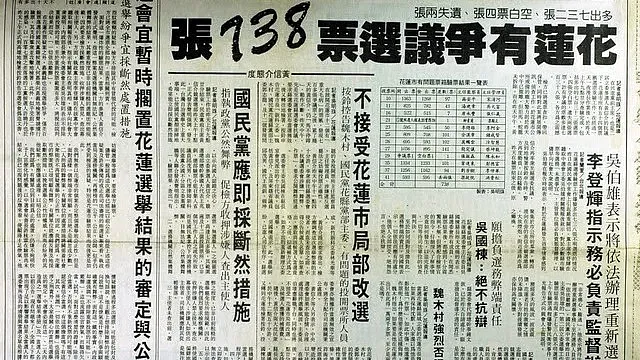
Do you still remember when and for what case we first fought side by side? It was December 19, 1992 (Saturday)—a day I will never forget. At that time, you had only been assigned as a prosecutor for 6 months, and I had just completed my 1st year; both of us were rookie prosecutors. I remember that day was the legislative election, and I was on internal duty. All the other prosecutors in the prosecutors office, including you, had gone out to investigate vote-buying. By dusk, before it had even gotten dark, a few journalist friends rushed to the prosecutors office, saying that a crowd was already gathering at the foot of Mount (Meilun) and trouble was about to brew on the mountain. At the time, I had no idea what that meant, assuming it was at most a few dozen people who would shout and yell before dispersing and going home. I didn't take it seriously at all.
It quickly grew dark. A long crowd of people suddenly appeared on Fuch'ien Road in front of the Taiwan Hualien District Court. Journalist friends said there were more than 1,000 people, led by a propaganda vehicle with high-volume loudspeakers, gathering toward the nearby county government office. At the time, I still thought it had nothing to do with us and secretly rejoiced. Little did I know, I was celebrating too early. In no time, the propaganda vehicle led the crowd surging back toward the court, packing the entire parking lot and garden in front of the court. The sounds of horns, broadcasts, and jeers came crashing down like a tidal wave. The crowd was led by legislative candidate Huang Hsin-chieh, and, swarmed by supporters, they all pressed toward the prosecutors office. Fortunately, before the election, the police had already set up barbed wire fences to temporarily isolate the crowd outside. But this was almost more than I could handle; having never faced such a crowd, I could only direct the police officers inside the office to set up video cameras to gather evidence, while calling the Chief Prosecutor to report the situation and calling superiors at the Taiwan High Prosecutors Office for reinforcement. Yet perhaps the telecommunication exchange had crashed at the same time, as no one answered the phone; even the other senior colleagues in the prosecutors office were nowhere to be found. At this moment, Mr. Huang Hsin-chieh led the crowd outside, loudly demanding to ring the bell to file a formal complaint. Seeing enemies before and tigers behind, with no reinforcements arriving, the number of surrounding crowds grew larger and larger. Cries of "rigged election" echoed to the skies, and the crowd's emotions grew increasingly agitated. Someone even threatened that if the doors were not opened to accept the complaint, they would burn down the prosecutors office. Right in the midst of this desperate situation, besieged on all sides, you suddenly appeared and told me you were here to help me handle this case. Suddenly, it felt as though many reinforcements had arrived by my side, greatly easing my mind. After discussing the matter, you told me to take charge inside while you went outside to negotiate with them. Just like that, you explained to the leaders that the matter had to be appealed to the County Election Commission before it could be resolved, and the crowd followed the leaders and moved toward the county government office. However, after arriving there, people at the county government told them that only a prosecutor could impound ballots and recount them, so Huang Hsin-chieh led the crowd back to the prosecutors office. Throughout the night, the crowd moved back and forth between the prosecutors office and the county government five or six times. In the end, Huang Hsin-chieh became furious, cursed you as a liar, and finally brought the crowd back to the prosecutors office to stay for good, shouting slogans about rigged elections and ballot recounts that drowned out the entire sky.
The whole night was spent surrounded by the crowd, worrying that the barbed wire fences would be breached, unable to think of a strategy to repel the enemy, and not knowing what else to do. The two of us spent the time leaning nervously against our office chairs, completely unable to close our eyes. The next day (December 20, Sunday), the crowd grew even larger, with major politicians from the Democratic Progressive Party (DPP) across other counties and cities rushing to Hualien in solidarity, sealing off the district court and prosecutors office even more tightly. At dawn, the Chief Prosecutor entered the office to cheer us on and discuss our next steps. I could see that he too had not slept all night and was undoubtedly under immense pressure. The consensus from our discussion was that a recount was acceptable, but the specific polling stations in question had to be pointed out; we could not aimlessly impound and recount all ballots in Hualien County—that was our bottom line, which could not be crossed.
Throughout the entire day, you shuttled constantly between the Election Commission and the prosecutors office to uphold this bottom line, communicating and negotiating with Huang Hsin-chieh. By 1 a.m., there was still no result, and both sides remained deadlocked at the bottom line. At noon, former DPP Chairman Hsiu Hsin-liang appeared. As soon as he arrived at the prosecutors office, he rang the bell to file a complaint—and the person he filed it against was you, while the prosecutor who accepted the complaint was me. He accused you of refusing to seal all ballots in Hualien County, constituting dereliction of duty. At the time, I didn't know how to proceed with taking the statement…
By the 3rd day of the siege (December 21, Monday), the office resumed work, and all our senior colleagues returned. By 3 p.m., Huang Hsin-chieh once again led the crowd to the prosecutors office to ring the bell and file a complaint. This time, he specifically pointed out a problem at Hualien City's 23rd polling station and demanded that its ballots be sealed. You and I went to the Hualien City Office to inspect it. After both sides confirmed the situation, we made a major decision: we agreed to seal all ballots from the 54 polling stations in Hualien City. Certified in the presence of Hsiu Hsin-liang, Huang Hsin-chieh, Shih Ming-teh, Chang Chun-hung, and others, you and I covered the ballots from Hualien City's 54 polling stations with canvas and applied the prosecutors office's official seals alongside them, completing the sealing procedure. After the sealing, DPP personnel announced this major news to the outside world, and the media vied to report it, causing the crowd surrounding the prosecutors office to gradually disperse. Up to this moment, the two of us had not been home to sleep or shower for three whole days. Upon returning to the office and briefing the Chief Prosecutor on the entire situation, he told us to hurry home to rest, shower, and prepare for tomorrow's recount.
At 8:30 a.m. on the 4th day, you, I, and Tseng Tai-yuan led three teams of clerks respectively. Under the leadership of the Chief Prosecutor and the Section Chief, we arrived at the Hualien City Office and initiated the ballot recounting procedure, verified by three legislative candidates, representatives from the County Election Commission, and several DPP representatives. Initially, because procedures were unfamiliar and for the sake of fairness, progress was very slow. By 3 p.m., Tseng Tai-yuan discovered a problem at the 11th polling station. Thirty minutes later, my team also discovered that a certain polling station had 97 extra ballots. Your team also found problems by 7 p.m., and subsequent issues surfaced one after another, corroborating Huang Hsin-chieh's allegations of election rigging. Once irregularities were uncovered, standby police and investigative personnel immediately began summoning and investigating the staff of the problematic polling stations. After 8 p.m., we handed over our work to senior colleagues Li Tzu-chun, Huang Hui-min, and Wu Chieh-jen, who continued the recount until 9 a.m. the next morning. In total, the case uncovered problems with 744 ballots across 12 polling stations.
For several days running, the three of us—you, I, and Tseng Tai-yuan—were busy summoning suspects and detaining defendants.
Working day and night, we spent nearly half a month back and forth before the facts of the case began to clarify. Throughout this process, we supported and encouraged one another, shared case details, and discussed future investigative directions and methods, fully demonstrating the efficiency of collective case-handling. Some people said this was the beginning of the first collective case-handling in Taiwan's history; in any case, three cobblers with alternate wits can put on a Zhuge Liang. As time passed, we finally handed over the collected evidence and case facts to the Section Chief Prosecutor to compile and file an indictment, and also filed a civil lawsuit to confirm the election nullification of another candidate surnamed Wei.
By the time all of this came to a temporary rest, nearly a month had passed. In the meantime, our time and energy had been almost entirely consumed by this case, leaving us no time to handle the new cases that had already been assigned previously or arrived subsequently. Once we stepped down from this case, the backlog of cases for both you and me had exploded, putting us both at the top of the prosecutors office's backlog chart. This incident resulted in my performance rating for the second year being downgraded to Class B. I don't know if you received a Class B as well?
Brother, I have always wondered: it was my turn for internal duty on the day the incident broke out, so it was my bad luck. But why did you jump in to provide heavy fire support for me? It implicated you to the point where you couldn't return home, had to sleep in the office, were cursed as a liar, accused of dereliction of duty, did thankless work, and even saw your performance rating affected. In today's fickle world where everyone looks out only for themselves, who else would disregard personal gains and losses to help others and sacrifice themselves? Why did you have to be so warm-hearted and righteous? If you hadn't stepped forward, wouldn't you have avoided all this humiliation and harm?…
Brother, I can never fully repay the debt of gratitude I owe you.
This article is an AI-generated translation of the original Chinese text. In the event of any discrepancy, the Chinese version shall prevail.
