
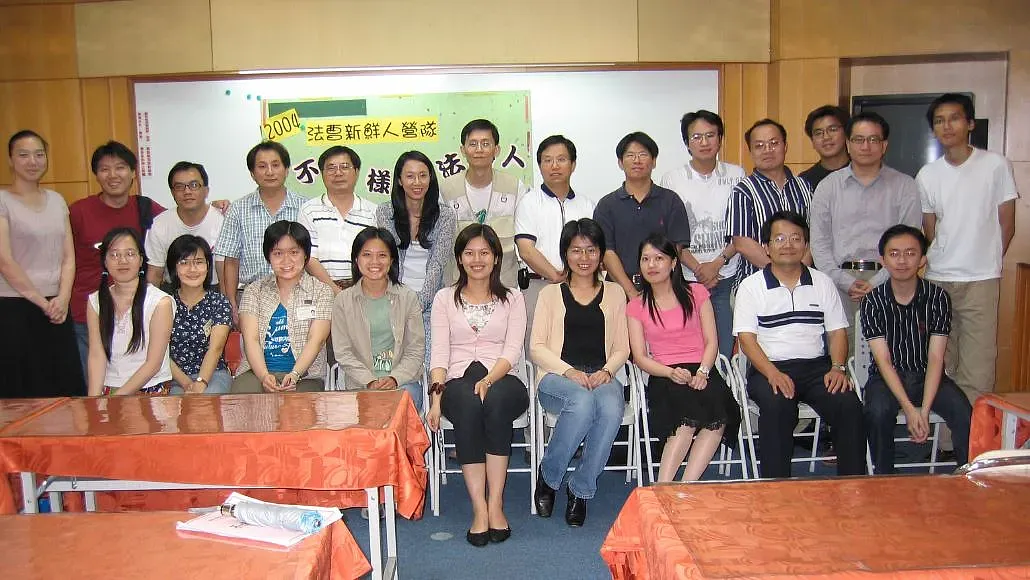
Prosecutor Lai, Prosecutor Lai...
Last edited: 2026-08-30
I learned about the passing of Prosecutor Lai Ching-hsiang from the Facebook posts of Judge Chen Ch'in-hsien and Professor Wang Chin-shou. I was shocked, saddened, and felt a bit regretful for not keeping in touch with him later on, meaning I've lost the chance to ask him many questions and chat about issues.
Prosecutor Lai—that is what we all called Prosecutor Lai Ching-hsiang. I sent a Facebook message to the "former JRF staff" who worked at the JRF around 2000 to tell them the news of Prosecutor Lai's passing. Aside from disbelief, everyone fell into their own memories of him.
Since its preparation and establishment, the Judicial Reform Foundation has been "infamous" in the judicial system. How on earth did a prosecutor get involved with the JRF? Huang Ya-ling, the office director of the JRF at the time and the person primarily in charge of the JRF's judicial evaluation, recalled the situation back then: it all started in 2000 when the JRF's 2nd Legal Novice Camp needed incumbent judicial officers to participate as lecturers and group leaders. For the 1st camp, Prosecutor Li Tzu-chun had been invited. However, by the 2nd camp, Prosecutor Li felt he was getting older and needed some new blood to join. Thus, with Prosecutor Li's help and networking, they invited Prosecutor Lai Ching-hsiang and Prosecutor Ho Ke-chang, who were then serving at the Hualien District Prosecutors Office, as well as Judge Chen Chin-hsien and Judge Chu Kuang-jen from the Hualien District Court, to serve as lecturers and group leaders for the camp. This marked the beginning of years of intertwined ties between the JRF and these incumbent judicial officers, giving the JRF the opportunity to interact and exchange views more frequently with frontline judicial officers. Afterwards, whenever the JRF held a camp, Prosecutor Lai was always the first to agree.
When I chatted with Judge Chen Chin-hsien about this, he said that he had actually invited other judges or prosecutors to participate in the JRF's camp activities. However, after participating in the two-day camp, some people complained to him, "Why are judges/prosecutors being criticized over and over again in these two days' activities!" and refused to participate thereafter. As for Prosecutor Lai, the aforementioned judges and prosecutors, and Prosecutor Chen Jui-jen, the more they were criticized, the more enthusiastic they became, automatically reporting for duty year after year.
Lin Tai-ling, who only joined the JRF in 2003 and was responsible for volunteer organization and the Legal Novice Camp, said she had spent a long time in the labor movement circle, and the judicial circle was very alien to her. At the very beginning, she really couldn't get used to the legal professionals inside the JRF; she always felt these lawyers had a sense of distance. They were rational and calm, and although they shared the same reform ideals and ambitions, it didn't seem so easy for them to open their hearts to others, and they didn't seem so... "passionate."
Tai-ling said the 2003 Legal Novice Camp was organized by her. The executive director at the time, Wang Shih-ssu, and Ya-ling took out the "exclusive" list and asked her to contact them one by one. Unexpectedly, these people—Brother Shu (Judge Chen Chin-hsien), Prosecutor Lai, and Prosecutor Ho—were super easy to communicate with and super approachable. Hailing from Kaohsiung just like Prosecutor Lai and having both attended Soochow University for college, Tai-ling and Prosecutor Lai immediately became close friends upon their first meeting at the camp. "This was the first time after coming to the JRF that I felt legal professionals also had warmth."
Ya-ling completely agreed with Tai-ling's observation. Prosecutor Lai participated in the 2nd through 5th Legal Novice Camps. Not only did he serve as a lecturer, but whenever he had time, he would definitely stay behind to continue "cultivating affection" with members about to become judicial officers, sharing his many years of investigative and case-handling experience, eager to infect everyone with his passion for handling cases like a virus. Every time, they would undoubtedly chat until late at night, and the group members would still linger for a long time. Ya-ling also mentioned that she had a super deep impression of Prosecutor Lai sharing how he bought high-tech equipment for surveillance and led investigations like a criminal squad leader! It is said that the current JRF Executive Director, Attorney Kao Jung-chih, was also captivated by Prosecutor Lai at the Legal Novice Camp back then.
Besides the Legal Novice Camp, Prosecutor Lai was also the JRF's "Stationed Yilan Special Correspondent."
The Judicial Reform Foundation began holding judicial evaluations in 1998, and the evaluation results published every year aimed to let the general public understand the state of the judiciary and hoped that the judicial system would begin to reflect and improve. The "Judge Ranking Tigers and Dragons List" made judges both love and hate it, and the JRF was even privately prosecuted for defamation by a judge at the time. Court observation was also one of the JRF's important tasks back then, though it was mainly held in Taipei. In 2002, the JRF recruited a "Court Observation Group" for the first time, visiting 17 courts across Taiwan to see whether the spirit of "justice for the people" was truly being implemented, and what the hardware facilities and service quality of the staff were like in each court.
During the first court observation in 2002, the Yilan part was led by Tai-ling and three volunteers. After the observation, they contacted Prosecutor Lai, who had already been transferred to the Yilan District Prosecutors Office. He immediately came out to meet everyone, treated everyone to ice cream, and talked eloquently about how he was transferred to this simple and unpretentious place called Yilan, how he fell in love with the local culture and customs, and shared interesting anecdotes about handling cases, where simple parties saw the prosecutor as if seeing an upright and honest magistrate... During the second year of court observation, it was my turn to lead volunteers all the way from Yilan to Hualien. This time, Prosecutor Lai took the initiative to help arrange accommodation and chatted with us a lot about local conditions, allowing the volunteers to quickly get into the swing of court observation.
Later, the JRF stopped holding the Legal Novice Camp, the court observation work came to an end, and the "former JRF staff" left the JRF one after another. Consequently, the contact and cooperation between the JRF and Prosecutor Lai diminished.
Chatting with current JRF partners, I always feel it's a great pity. The camps back then definitely featured dialogues where the prosecution, defense, and bench attacked each other, poked fun at each other, and cheered each other on—it was extremely wonderful. I really hope such planning can happen again in the future, as it would surely be very helpful for legal novices. However, even if it were held again, Prosecutor Lai's friendly smile would no longer be there.
In fact, apart from his approachable and winning charisma, what is even more admirable is Prosecutor Lai's dedication and earnestness toward judicial work, especially his insistence on frontline investigative work, totally unconcerned with performance reviews and promotions. Whatever path one walks leaves traces behind, and exemplary models will endure forever!
I have been wondering: why do we rarely see prosecutors who dare to clash, shoulder responsibility, and are willing to throw themselves into the current judicial reform? I really want to ask Prosecutor Lai this question; how would he answer me?
This article is an AI-generated translation of the original Chinese text. In the event of any discrepancy, the Chinese version shall prevail.
