
Every Major Judicial Case Is an Opportunity for Rule of Law Education
Last edited: 2026-07-27
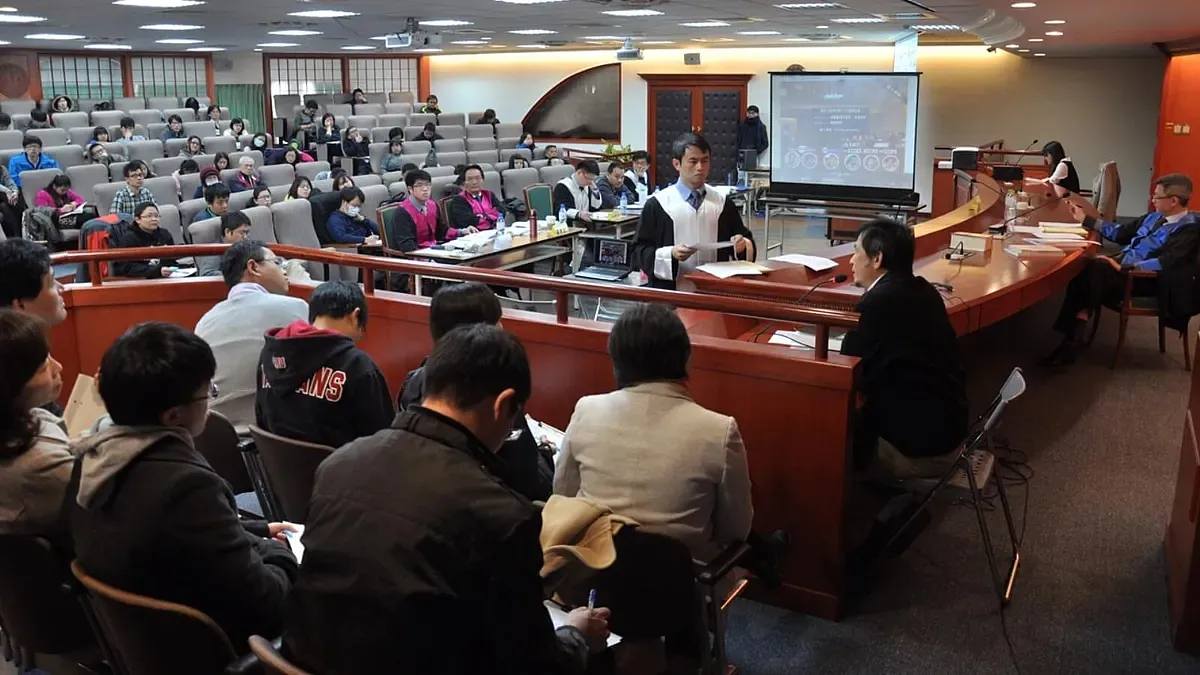
Photo/Simulation trial scene organized by the Judicial Reform Foundation
Following the verdict in the Ting Hsin case, public opinion once again unleashed a wave of criticism against the judiciary. From the public's perspective, the judiciary is out of touch with society, and they seek to pressure it to change. From the official perspective, the people do not understand the law, and in order to resist populism, independence is used as the ultimate bastion of justice. This is a vicious cycle, and someone must take the initiative to make a change.
Judicial adjudication is a persuasion project for a nation. Moreover, given Taiwan's authoritarian past, the judiciary must gradually abandon "mysticism" and cast aside the myth of establishing "judicial authority" through "inscrutable imperial might." Communicating carefully and patiently with the people is the long-term path to democracy and the rule of law. In fact, whenever there is a major judicial case, it should be regarded as a "heaven-sent opportunity" to conduct rule of law education, so that the people may gradually come to trust the judiciary.
Simultaneously Release Judgments and Indictments / Non-Prosecution Dispositions
The first bad habit that must be eradicated is the practice where prosecutors are unwilling to release indictments and non-prosecution dispositions upon announcing an indictment, non-prosecution, or a verdict, and judges fail to release judgments at the same time. Prosecutors announcing indictments or non-prosecution decisions in major cases as they please—releasing them when they want and withholding them when they don't, doing whatever they wish—truly reflects a self-aggrandizing mindset.
As for judges deciding when to deliver a verdict, this is entirely within their own hands. Since judgments have to be made public sooner or later, there is no reason why judgments cannot be released simultaneously with the pronouncement of the verdict. Of course, the content of the judgment will then be subject to public scrutiny. However, this is premised on the judge being "willing" to communicate with the general public; the reasoning in the written judgment must be coherent and easy to understand, and cannot use obscure terminology or a mix of classical and vernacular Chinese to conceal their true thoughts—otherwise, it shows a lack of sincere intent to communicate and dialogue with the people.
In fact, since judges and prosecutors know in advance that a case is major, they also know that the media and various sectors of society will inevitably offer diverse commentary. The life of the law resides within these discourses. Failing to release these discourse materials at the same time is tantamount to giving all sectors room for their own imagination. Journalists must write reports, and political commentators must make remarks; rather than letting all parties concoct their own stories, why not let everyone read, analyze, and understand the judgments, indictments, and non-prosecution dispositions painstakingly written by judges and prosecutors?
Make Good Use of the Media and Spokespersons
Beyond this, we must make better use of opportunities to dialogue with the media. Senior officials of the Ministry of Justice and the Judicial Yuan should understand that this is already an era where the media influences public perception and hearing. It is precisely because of this that courts and prosecutors' offices at all levels appoint spokespersons and issue press releases.
Unfortunately, press releases are often overly brief and contain limited information. Even professional communities wishing to defend judges and prosecutors may hesitate repeatedly, worrying about excessive endorsement, over-speculation, and insufficient reasoning. Spokespersons are mostly administrative presiding judges holding concurrent positions, so legal expertise is certainly not an issue, but their strengths happen to be their weaknesses.
Looking at spokespersons overall, two problems frequently arise. One is insufficient communication with the judges or prosecutors originally handling the case, making it impossible to accurately interpret key turning points and the inner thought process. The other is that the method of speaking is overly "professional," preventing the public from directly grasping the main points, which of course once again requires "translation" by the media.
Therefore, it is recommended that spokespersons receive some media training or assistance so they can translate legal terminology into a format easier for the general public to understand, and also make it easier for the media to grasp the key points. Furthermore, it is best to pre-draft answers to potential questions. The judiciary is about reasoning and persuasion; do not give people the impression of dodging questions.
Finally, if we want to properly conduct rule of law education, we must not intentionally choose times like "5:00 PM" before leaving work (especially when deliberately choosing a Friday) to release major news. Doing this clearly aims to compress the time available for the media to process the information. Mistakes easily happen in a rush; the media may not do it intentionally, but the damage to the judiciary has already been done.
In short, the judiciary should keep its doors wide open and walk the main road, speaking without reservation and telling everything it knows. By leading public discussion to strengthen rule of law education, can we gradually accumulate the public's trust.
This article is an AI-generated translation of the original Chinese text. In the event of any discrepancy, the Chinese version shall prevail.
