
Caught in the Crossfire Every Election: Who Are Prosecutors to Blame?
Last edited: 2026-07-27
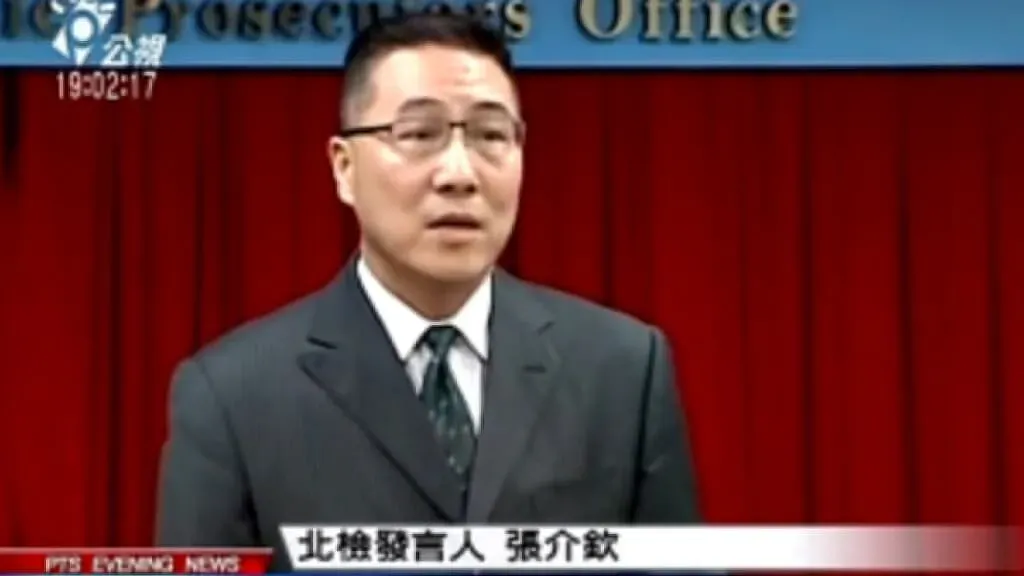
Image Source / PNN Public Television Center
Let us interpret the prosecutors with the utmost goodwill. Ko Wen-je's campaign office suspected wiretapping and reported it to the police. Police and prosecutors intervened in the investigation, while his opponent, Lien Sheng-wen, questioned whether it was staged. An investigation always has a direction; to claim neutrality is false. An investigation cannot proceed at all without a direction. It either presupposes that Ko's office is the victim or that Ko's office is lying. Prosecutors sometimes investigate in the direction of "wiretapping" and sometimes in the direction of "being staged." Whichever direction they take, the respective side inevitably jumps to protest. Both sides face the pressure of not losing votes. If prosecutors are the slightest bit careless during an investigation, they are easily subject to criticism from all sides. Coupled with the fact that both sides wield public opinion as a backing, their views command attention; should there be any misstep, the backlash prosecutors must bear is immense. Unlike ordinary citizens whose voices fail to be heard, prosecuting cases is no easy feat for prosecutors—this is the reality. The core focus of handling a case is rigorous procedure. Procedure is used to ensure the objectivity and fairness of the outcome, while also protecting oneself.
A few days ago, Ko's campaign staff member P'eng Sheng-shao voluntarily appeared before the authorities. After interrogation by the prosecutor, his status was changed from a witness to a defendant, he was handcuffed, and bail was set at 30,000 NTD. His lawyer and P'eng protested on the spot and refused to post bail, which drew media attention. Unexpectedly, the prosecutor immediately reopened the hearing, made a concession, changed the disposition to restriction of residence, and released him.
Rigorous Procedure is the Ultimate Safeguard
The Taipei District Prosecutor's Office had previously seen its request to detain a detective agency operator rejected by the court. Pressing forward, they took action against P'eng, but upon encountering resistance, they immediately backed down. Legally speaking, a prosecutor certainly has the authority to convert a witness into a defendant on the spot, can demand bail, and can certainly modify the disposition from bail to restriction of residence.
However, ever-changing procedures inevitably give an impression of frivolity. If they fail to provide compelling reasons—especially at this sensitive electoral moment when public trust in the judiciary has historically been low, compounded by the lingering shadow of prosecutors subservient to politics since the authoritarian era—avoiding suspicion or attack is difficult.
Converting a witness into a defendant on the spot is an old problem in Taiwan's judiciary, vividly illustrating the bad practice of prosecutors making light of procedure or even manipulating it during investigations. The precise timing at which the status of a "defendant" is established is crucial to the right of defense in litigation. In short, the state must openly and plainly inform me that starting "now," I am a "defendant," thereby giving me the opportunity to prepare.
From this moment onward, I enjoy the rights guaranteed by the Constitution and the Code of Criminal Procedure, because the state is "beginning" to prosecute me. An upright prosecutor represents an upright state. Conversely, a less-than-aboveboard prosecutor represents a state that is murky and malicious, driven solely by the desire to impute guilt.
In practice, it is common to see prosecutors engage in fishing expeditions: first summoning a person under the status of a witness, asking a battery of questions, and only after obtaining the desired answers do they inform the witness, "You are now a defendant. Was what you just said the truth?" Of course, sometimes prosecutors are not acting maliciously; the witness simply talks too much and ends up confessing to a crime and spilling all the details. However, there are also prosecutors who use this tactic to circumvent the law with the explicit purpose of barring lawyers from being present.
This is because, by law, only defendants "may" have lawyers, whereas witnesses cannot (and need not) have lawyers. Yet, if a prosecutor fundamentally believes from the outset that an individual is heavily implicated, yet deliberately summons them under the guise of a witness to keep their lawyer from being present—or even expels the lawyer using this as an excuse—they are manipulating procedure. Even if they manage to exploit legal loopholes and break no laws, such conduct is insufficiently forthright and forfeits their professional integrity.
Furthermore, release on bail, entrustment to a custodian, or restriction of residence are, in reality, alternative measures to detention. In other words, the prerequisites for detention must first be met before the questions of bail, custodial entrustment, or restriction of residence even arise. Yet, in judicial practice, prosecutors apply restriction of residence almost as "standard equipment," using it freely and handing it out indefinitely.
As for release on bail or custodial entrustment, it is treated essentially as a "favor." The mindset of the prosecutor is: "It is already quite kind of you that I am not seeking your detention!" They completely fail to realize that these are all coercive measures which require careful consideration of sufficient grounds for detention and the necessity of applying such coercive measures.
When procedural rigor and people's rights are not taken seriously, the moment they encounter "VIPs" and are subjected to intense scrutiny, they completely crumble under the test. Even worse, they shrink back first, dealing a self-inflicted blow to their own reputation. Taking P'eng Sheng-shao as an example, when the prosecutor demanded bail, they "should" have already considered that the grounds for detention were met; if the defendant refused, they "should" have petitioned the court for detention. If they backed down, it means the previous bail order was deeply problematic as well—a total slap in the face.
Blind Loyalty is Foolishness
Finally, I must speak a word of fairness for frontline prosecutors. In sensitive cases of this nature, the prosecutor's office should handle them collaboratively, pooling collective wisdom to prevent blind spots of which they are unaware, and to guard against arbitrary and unilateral decision-making. Therefore, intervention and coordination by the chief prosecutor is nothing to stutter about. Intervention is not the key issue; the key is taking public, named responsibility, rather than leaving frontline prosecutors to bear the brunt of the abuse while higher-ups act as shadowy puppeteers, resulting in a mismatch between power and responsibility.
The "Sunshine Bill on the Unity of the Prosecutorial System" is vital, as it preserves the internal independence of the prosecution system. Article 92, Paragraph 2 of the Judges Act already explicitly stipulates that when a chief prosecutor directs frontline prosecutors in matters involving coercive measures, they must do so in "writing." On the one hand, this clarifies authority and responsibility—whoever gives the order bears the responsibility. On the other hand, it protects the independence of frontline prosecutors, enabling them to resist unreasonable or even illegal orders from superiors. When a chief prosecutor issues orders without writing, they intend to shirk responsibility, committing an illegality from the start. Only with a "written record" can the responsibility of wrongdoers be investigated post hoc.
Rigorous adherence to procedure during investigations, coupled with the subsequent clarification and accountability of those who violate the law and neglect their duties, is the only way to progressively build a sound prosecutorial system. The current prosecutorial system is far too reminiscent of a gang of cronies, making light of the rule of law and heeding only the will of their superiors. If talented prosecutors equipped with legal literacy still practice this kind of "blind loyalty," it is truly a tragedy for Taiwan's legal order. Blind loyalty and foolishness are not far apart.
This article is an AI-generated translation of the original Chinese text. In the event of any discrepancy, the Chinese version shall prevail.
