
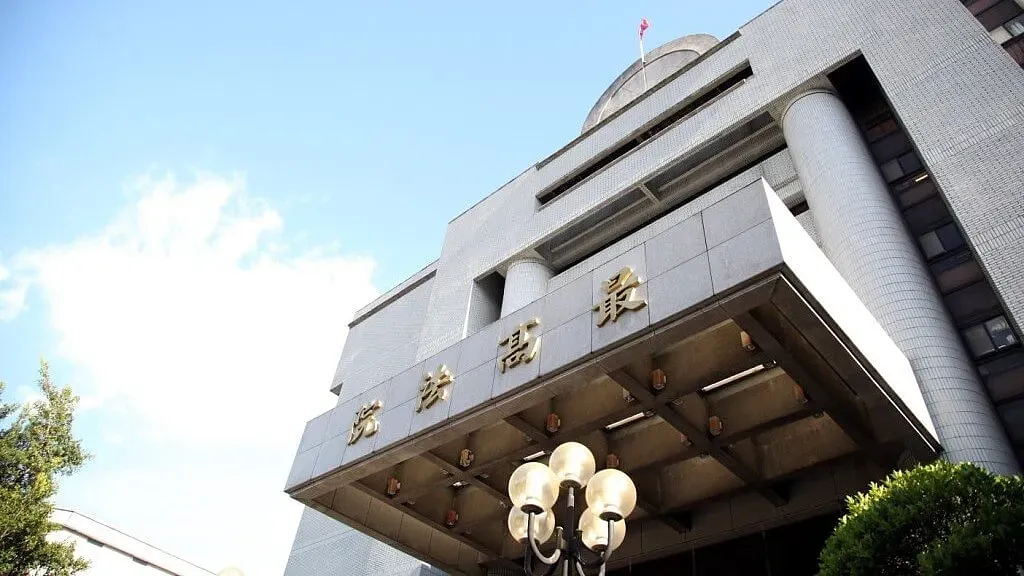
The Supreme Court is Truly Low
Last edited: 2026-11-08
The Supreme Court bears "Supreme" in its name. However, names typically fall into two categories: those that live up to their reputation, and those adopted precisely because the quality is lacking. The Supreme Court sounds lofty, but upon closer inspection, the only thing "supreme" or "deep" about it is its unfathomable ability to evade accountability.
As previously mentioned in the article titled "Why the Supreme Court is Not Respected," the Supreme Court's legal opinions are riddled with uncertainty and are frequently criticized by scholars for lacking any theoretical foundation. Even its long-standing, stable statutory interpretations are prone to changing on a whim overnight. Modifying previous resolutions through meetings is defensible, but even the most basic practice of publishing these issues has been erratic—abruptly issuing notices that no notice will be given, and then suddenly publishing them anyway. To top it off, these notices are aggressively broadcast via press releases. Those press releases are tacked right alongside the notices stating that no notice would be given, leaving people completely baffled.
Exemplary Chinese Proficiency
It is thus evident that the Supreme Court breaks its own word, not only when it comes to legal interpretations—which it alters arbitrarily and without reason—but also in its meeting procedures, which are conducted quite casually. The subsequent publication of outcomes lacks any consistent rule. Rather than resembling a wise elder of high moral standing, steadfast, self-contained, and deliberate, they act more like a group of unruly children throwing a tantrum.
Take the Supreme Court's own pledge as an example. In December 2012, it announced that oral arguments would invariably be held for cases involving the death penalty declared in the second instance, and court sessions would also be convened for cases of major legal significance. This statement sounded noble—aimed at "implementing the principle of public trial" and "protecting the litigation rights of the parties concerned." Better late than never, the Supreme Court was finally opening its doors to welcome the public.
Recalling the bustling scene when the Supreme Court "opened its doors" at the end of 2012, the current lack of enthusiasm and sparse attendance stand in stark contrast. The hollowed-out nature of oral arguments has reduced what should be riveting courtroom drama into disjointed monologues where parties simply talk past one another without any genuine engagement. Not only are spectators left thoroughly uninterested, but even courtroom personnel frequently find themselves dooping off. As media spotlights faded, for an entire half-year period from late November 2013 to May 2014, despite the existence of death penalty cases, no court sessions were held whatsoever, and no one even noticed.
According to gathered data, at least two cases reached verdicts without any court sessions being held at all, on December 19, 2013, and March 19, 2014, respectively. We began to worry that the standards for other so-called "legally significant" cases were overly abstract, allowing the Supreme Court to selectively pick and choose cases to hear. Worse yet, even in death penalty cases—which they claimed would "definitely" involve court hearings—the Supreme Court seemed to be slacking off, adopting an attitude of "we simply aren't going to hold a hearing, what can you do about it?"
Of course, those two cases were rulings to set aside and remand, prompting the Supreme Court to perhaps retort: "We were going to remand them anyway, why bother holding a hearing!" Perhaps there is a shred of logic to this claim, except that it once again contradicts what they initially promised. Unable to contain ourselves, we sent an inquiry at the end of May asking: given that a major part of 2014 had already passed, what exactly was the reason for failing to hold court hearings for death penalty cases?
While our official document clearly inquired about "death penalty cases," the Supreme Court exercised its profound expertise in "philology" by offering evasive answers to substantive questions. Seizing upon a minor stylistic inconsistency in our text—wherein the "subject" explicitly asked about cases "from 2014 to the present," but the "body text" cited a specific example with an extra sentence stating: "From the hearing on 'November 29, 2013' to 'this year (2014),' no cases have yet been heard"—the Supreme Court made a huge fuss and "reprimanded" us in return.
Its grandiose response was: "Since November 30, 2013, to the present, 'multiple' civil and criminal cases have been heard," and our official inquiry "appears to be based on a misunderstanding." For a moment, we felt a pang of guilt: had our verification been inaccurate, causing us to misunderstand the Supreme Court? Upon cross-referencing the data, however, it became clear that the Supreme Court truly possesses the "highest proficiency in the Chinese language," interpreting Chinese in ways that utterly defy ordinary common sense.
To put it bluntly, following November 30, 2013, exactly two cases held hearings: one on December 17 concerning "aboriginal hunting rifles and acquittal," and another on December 3 involving a civil parent-child dispute. As for 2014, there was indeed absolute silence with zero hearings! Why insist on starting the count from November 29 simply because we added an extra sentence? Furthermore, the hunting rifle case was not a death penalty case, and the parent-child dispute was a civil matter tried behind closed doors—who could possibly see it? Most absurdly, can two cases honestly be considered "multiple"? They certainly have no shame making such a claim.
The first half of 2014 saw no court hearings. Period. It is as simple as that. Admitting it straightforwardly is no big deal; going half a year without a hearing does not mean hearings will never be held in the future! Besides, under judicial independence, the schedule of each case rests in the hands of the judges; who has the power to compel anyone regarding when or how often hearings must be held?
Such responses merely prove once again that the Supreme Court is in dire need of some "chest-expansion exercises." It evades and dodges even the most trivial inquiries, refusing to provide a direct response. Moreover, it refuses to absorb even the slightest blow, nitpicking and splitting hairs. Its primary concern is saving face rather than "implementing public trials and protecting litigation rights." Judging by this single glimpse, getting the Supreme Court to admit that its judgments might contain errors must be harder than ascending to heaven.
Moving from Chinese to English
Whether prompted by our "meddling" or not, the Supreme Court finally held a death penalty oral argument in July, and finalized that death penalty case on September 2, sparking widespread skepticism. First, if the Supreme Court truly believed that "if a death sentence is to be set aside, there is no need for a hearing," then by inverse deduction, "cases that do have hearings must be destined for the death penalty." This further demonstrates that oral arguments have long been completely hollowed out. Court hearings are nothing more than a "sham maneuver"; with life and death already predetermined, the hearing is merely an act performed to garner a good reputation. No wonder even the defendants do not need to be summoned to court.
Furthermore, the Supreme Court enjoys playing with etymology—this time extending its linguistic acrobatics from Chinese to English. Seizing upon the English word "urge," it forcefully squeezed out the Chinese translation "supervise and urge" (督促). It implied that United Nations resolutions merely "gently persuade" judges: "Please don't impose the death penalty on people with mental disabilities, okay? Please, I beg you? I'm pleading with you?" carrying zero binding force. Put simply, the Supreme Court was desperately trying to arrive at the conclusion that the resolution "has no legal effect."
Indeed, the Supreme Court was truly "having a blast" this time around, even going so far as to distinguish between the United Nations "Human Rights Commission" and the human rights body attached to the Two Covenants, the "Human Rights Committee," further asserting that only the interpretations of the latter are worthy of compliance, while the former is merely for "reference." Such arguments—which completely ignore the requirement to examine international human rights norms holistically and honor the substantive spirit of the provisions, instead getting bogged down in literal meanings and institutional name variations—are truly shameful. Such a narrow mindset is certainly far from "supreme"!
In fact, judging from the argumentative thread of this judgment, one can surmise that the Supreme Court must have felt extremely guilty. On the one hand, it denied that the defendant had a mental disability, directly sentencing them to death; on the other hand, it argued strenuously to convince people that even if someone does have a mental disability, they can still be sentenced to death. However, if the defendant had no mental disability to begin with, there would have been no need to paint legs on a snake or render an ultra petita ruling. Compared against the Supreme Court's perpetually secretive and evasive persona, this behavior is a classic case of "the culprit protesting his innocence too much."
Ultimately, the spirit of the Two Covenants is crystal clear: they oppose the death penalty. The drafters of the Two Covenants recognized that countries retaining the death penalty often need time on the road toward abolition. Therefore, directly "prohibiting" countries from utilizing the death penalty is not an optimal approach, as it could easily backfire.
Consequently, the Two Covenants cleverly instituted only a "prohibition" preventing countries from "using the Two Covenants to justify the death penalty." Any application, interpretation, or invocation of the Two Covenants under whose banner a death sentence is handed down constitutes a violation of the Two Covenants. It is as simple as that. Period.
To see the whole through the part: if small issues are handled with cowardice and pedantry, major issues can be easily imagined.
※ Author's correction: The Supreme Court held hearings for two civil cases in 2014 (Jan. 7 and Mar. 18). Due to a failure to properly verify, an apology is hereby offered.
This article is an AI-generated translation of the original Chinese text. In the event of any discrepancy, the Chinese version shall prevail.
