
The Reform Dictated by Lord Kuan
Last edited: 2026-07-27
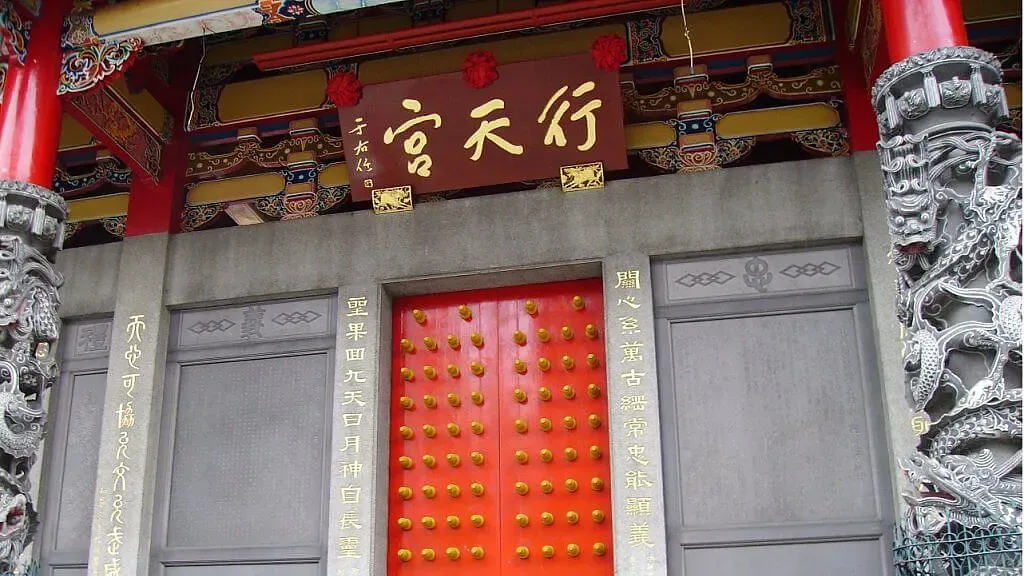
Hsing Tian Temple's decision to ban incense-burning and offerings might at first seem to defy folk traditions and culture, bordering on sacrilege. Yet when the news broke, society largely responded with praise, seemingly signaling that environmental awareness has deeply taken root. Of course, persisting in reform is no easy feat, and some have even compared it to a new-generation "religious reformation."
Interestingly, most temples in central and southern Taiwan maintained a low profile and remained silent, offering no vehement criticisms of apostasy nor opposing progressive environmental awareness. What the media chose to highlight—drawing more drama and public sympathy—were instead the helpless plight of nearby vendors with unsold inventory and the anguished worries of elderly women fearing the loss of their livelihoods. This is a classic social reform campaign, and its underlying factors are worth exploring further.
Reforms Riding the Tide Are Already Difficult
Hsing Tian Temple enjoys bustling patronage and has become an indispensable landmark in Taipei City. Its enthusiasm for public welfare and excellent social image are also deeply ingrained in the public's hearts. Financially, its incense offerings are abundant, and since it has long discontinued the burning of joss paper, stopping the burning of incense sticks is unlikely to affect its operations, having already laid a solid foundation.
Thus, backed by the approval of Lord Kuan and the final wishes of its masters (appealing to powerful authority), raising high the banner of progressive values (environmental protection and health), and reinterpreting traditional values (joining hands in prayer, sincerity matters above all), these three pillars stand strong. Amidst overwhelming support, the temple smoothly carried out a trendsetting transformation.
Of course, such a reform is by no means without risk or pressure. In particular, "offering incense and praying" has permeated almost every facet of daily life—our routines, language, thoughts, and behaviors. This is deeply intertwined with "devotion"; one only needs to look at an elderly grandmother's wrinkled face as she holds aloft three clean sticks of incense and murmurs a prayer to feel a warm and touching sensation. It is a humble and pious communication between life and the higher meaning of the universe.
Reform should perhaps be just like this: advancing humbly and sincerely toward higher values and meanings. Whether it is religious reform, political reform, social reform, or judicial reform, reality is inevitably accompanied by varying degrees of pressure. Countless traditional cultural practices also saturate every corner of our lives. The very first step if one truly wishes to reform is to hold higher values within one's heart.
Reforms Against the Tide Require Even Greater Perseverance
What is disheartening is that those holding high office in official circles often bluntly declare themselves "powerless to reform." Sometimes, they even put the cart before the horse, hoping that civil society groups and various NGOs will lend more "momentum and support" so that the "voices of reform" can "shake the civil service system," enabling them to finally "ride the tide of reform."
Riding the tide of reform is not inherently wrong; what is wrong is the mindset of "those in power" and their lack of values and convictions. Whether constrained by tangible pressures, intangible structures, external judgments from others, or their own internal shackles, if one only wishes to "go with the flow" and "guide things along favorable trends," and refuses to take responsibility unless "crowned with the yellow robe" and "surrounded by adoring stars," blindly dodging issues and acting purely as a "self-serving bureaucrat," they are destined to achieve nothing grand.
Perhaps the culture of compromise has its influence, or perhaps Taiwan's official promotion system is the root cause of the problem—relegating and burying talented individuals who have the courage to offer dissenting advice against the current so that they never rise to prominence. Conversely, those who do rise are individuals who dare not or refuse to boldly innovate and experiment. Reforms riding the tide are already hesitant; reforms going against the tide are utterly a fruitless pursuit.
The Judicial Reform Inspired by Lord Kuan
Viewed in this light, the groundbreaking reform implemented by Hsing Tian Temple is truly a remarkable feat. Choosing its values and deciding on its approach, it announced and carried them out. Measuring its own strength and assessing manageable risks, it forged ahead without hesitation, leading those willing to follow into a brand-new path.
Hsing Tian Temple did not guarantee that such a reform would satisfy all believers or be followed by temples nationwide. However, it genuinely strove to persuade everyone that this reform was the right direction, hoping the public would trust them—whether based on faith in Lord Kuan, reverence for its masters, pursuit of progressive environmental values, or acceptance of traditional values through a reinterpretation. Any of these reasons would suffice, thereby maximizing the care for all stakeholders and those sharing a common destiny.
Finally, guided by these insights given to us by Lord Kuan, we may perhaps begin to comprehend the reasons why judicial reform has progressed at a snail's pace.
This article is an AI-generated translation of the original Chinese text. In the event of any discrepancy, the Chinese version shall prevail.
