
Social Movements Are a Long and Painful Road: Ch'en Ch'u-hai: Persistence Brings Hope
Last edited: 2026-07-27
Watchout aims to act like a farmer, providing citizens with better platforms and tools to participate in current affairs, fertilizing and irrigating the soil of this civil society, allowing the seeds of this ideal to sprout and grow in everyone's heart, and building a true civil society.
- Watchout Fan Page http://fb.com/WatchOutTW
- Congress Wushuang http://musou.tw/
- Mr. Mayor, Can I Ask? http://wethepeople.tw/
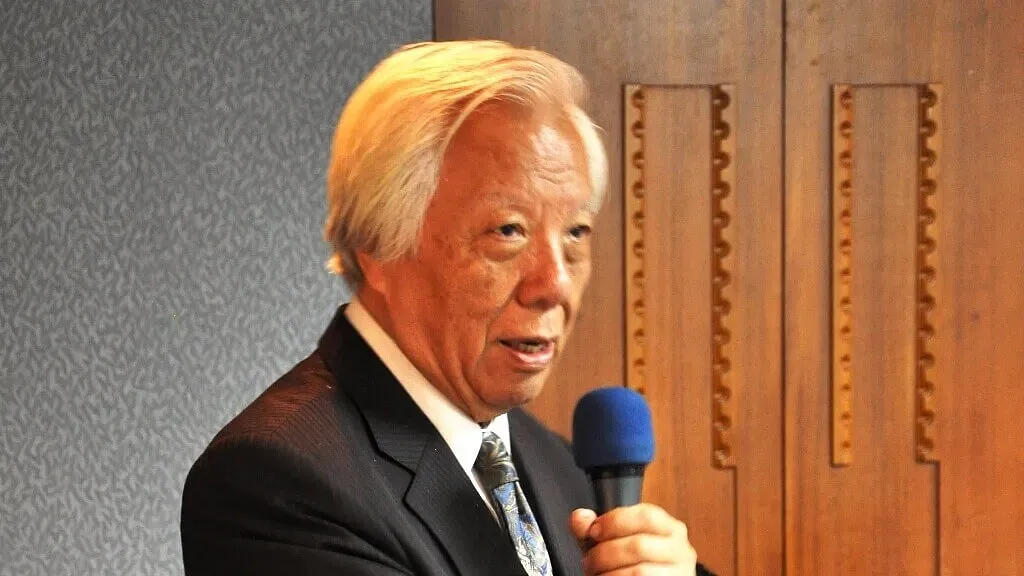
Over the past year or so, civic consciousness has awakened in Taiwanese society, with a growing number of groups caring about social issues and participating in social movements. In an exclusive interview with Watchout, renowned social movement activist and Academia Sinica Institute of Sociology research fellow Ch'ü Hai-yüan pointed out that social movements are a long and painful road. After many social movements, it is not easy to see changes in the short term, because those willing to step forward and adhere to their ideals are, after all, a minority in society, and they often feel painful and lonely when returning to their everyday lives. However, he still encouraged young people, noting that society relies on idealists to promote reform in order to change: "Persistence is the only hope for Taiwanese society."
The Wild Lily Student Movement: Limited Changes in the Short Term, Yet It Still Prompted Regime Transformation
From March 16 to 22, 1990, the well-known "Wild Lily Student Movement," also known as the "March Student Movement," broke out in Taiwan. At the time, numerous university students from all over the country gathered at the Chiang Kai-shek Memorial Hall Plaza for a sit-in, putting forward four major demands: "dissolving the National Assembly," "abolishing the Temporary Provisions," "convening a National Affairs Conference," and "establishing a timetable for political and economic reforms." They also met with then-President Li Teng-hui to convey their demands. Following the conclusion of the student movement, Li Teng-hui fulfilled his promise to the students by convening the National Affairs Conference, and abolished the "Temporary Provisions against the Communist Rebellion" the following year in 1991, bringing an end to the "tenure-unlimited parliament."
Twenty-four years later in March, Taiwan witnessed the even more astonishing Sunflower Student Movement, which connected with movements from the preceding year initiated via the internet—such as the Citizens 1985 Action Alliance's August 3 Whiteshirt March for Hung Chung-chiu, the August 18 Demolish the Government rally in Dapu, and anti-nuclear movements. These all gathered massive popular support, presenting a completely different landscape for Taiwan's social movements. Watchout recently interviewed Ch'ü Hai-yüan, asking him to analyze the past and future of Taiwan's social movements based on his own experience and observations.
Ch'ü Hai-yüan pointed out that, in fact, before the outbreak of the Wild Lily Student Movement back then, numerous sporadic protests had already occurred in Taiwan. From the early 1980s to the 1990s, there were persistent student movements across various schools, labor movements, farmers' movements, and other actions, until this event occurred in March of that year, providing a focal point for the masses to truly mobilize. Without the horizontal communication channels accumulated through previous sporadic protests, mobilization would have been practically impossible.
Ch'ü Hai-yüan stated that during the Wild Lily Student Movement, students hoped to contact the Presidential Office to convey their demands, and thus approached him and then-National Taiwan University College of Law Professor Ho Te-fu to handle negotiations with the Presidential Office. The student groups came from universities across the country, and the discussion of demands and decision-making on matters were all conducted through democratic mechanisms. Consequently, discussions and resolutions alone consumed a great deal of time, with various differing voices continually emerging, often requiring extensive discussion or voting to forge a consensus.
What kind of impact did the movement leave on society afterward? Ch'ü Hai-yüan expressed that, pessimistically speaking, the protesting masses were a sheet of loose sand—"perhaps some grains of sand were rather hard," but combined, they remained loose sand. Once the movement withdrew, its influence in society was virtually imperceptible within just a few weeks. In fact, upon the conclusion of the Wild Lily Student Movement, there had been an agreement to return to one's own circles of life to deeply cultivate democracy, much like the commitment after the Sunflower Movement to "bloom everywhere," but in reality, the impact immediately following the end was limited.
While on the plaza, these crowds could interact with peers who shared similar ideas, but upon returning to their own life circles, they became the minority, making them prone to questioning, "Why is society still like this after I've done so much?" They would feel isolated, angry, and even want to give up. Citing the Wild Lily Student Movement, Ch'ü Hai-yüan pointed out that although Li Teng-hui subsequently held the National Affairs Conference, many scholars and experts actually walked out halfway through the proceedings, turning the National Affairs Conference into a "two-party negotiation meeting." Although students were invited to attend, they were not the students involved in the student movement; the national affairs meeting completely transformed into an "adults' meeting."
Ch'ü Hai-yüan explained that although changes were not visible in the short term after the Wild Lily Student Movement, in the long run, these movements still gradually influenced society and drove social progress. He gave the example that following Li Teng-hui's National Affairs Conference, a constitutional amendment conference was convened the following year, transforming Taiwan into a presidential system. He believes these substantive impacts were, in fact, contributions of the Wild Lily Student Movement. Addressing concerns that the student movement's impact was not significant, Ch'ü Hai-yüan stated that the government is a persistent organization possessing numerous institutional cultures and inertia, and many things are difficult to change even through revolution. Taking China as an example, he pointed out that despite experiencing two revolutions over the past century, its old bad habits have not been completely eradicated, let alone a student movement which merely demands "reform" rather than "revolution"—change is inherently difficult to achieve overnight.
Social Progress Relies on the Drive of an Idealistic Minority
Recalling his experiences over the past few decades participating in social movements and promoting numerous reforms, Ch'ü Hai-yüan reflected with a sigh that the majority of reforms he participated in promoting did not succeed, especially political and judicial reforms that shook vested interests, which are even more difficult. Taiwan is a place that has undergone prolonged authoritarian rule, and both the government and the general public are relatively conservative, disliking change. Most people are content with the status quo, adopting a "let unreasonable things slide" attitude. Consequently, those promoting reform are forever a minority; "if they were the majority, reform wouldn't be necessary!" Ch'ü Hai-yüan emphasized that pursuing justice and ideals is a very long and painful road, true for every individual and group alike, "because the social mainstream is not like this." If everyone is complacently conventional, society will sink. Society must rely on the persistence of this idealistic minority to continue progressing.
Regarding social protests in recent years, Ch'ü Hai-yüan maintained a relatively optimistic attitude. He stated that thanks to high technology and overall societal conditions, it is now possible to mobilize more people in a short period of time, and the energy does not dissipate as easily as in the past. Nevertheless, he reminded that while it is not easy to see changes immediately following a movement, as long as one delves deeper into the issues and makes continuous, unremitting efforts, it will persistently influence society and foster genuine transformation.
This article is an AI-generated translation of the original Chinese text. In the event of any discrepancy, the Chinese version shall prevail.
