
【Legal Life】Ch18 Some Things Just Shouldn't Be Said
Last edited: 2026-11-03
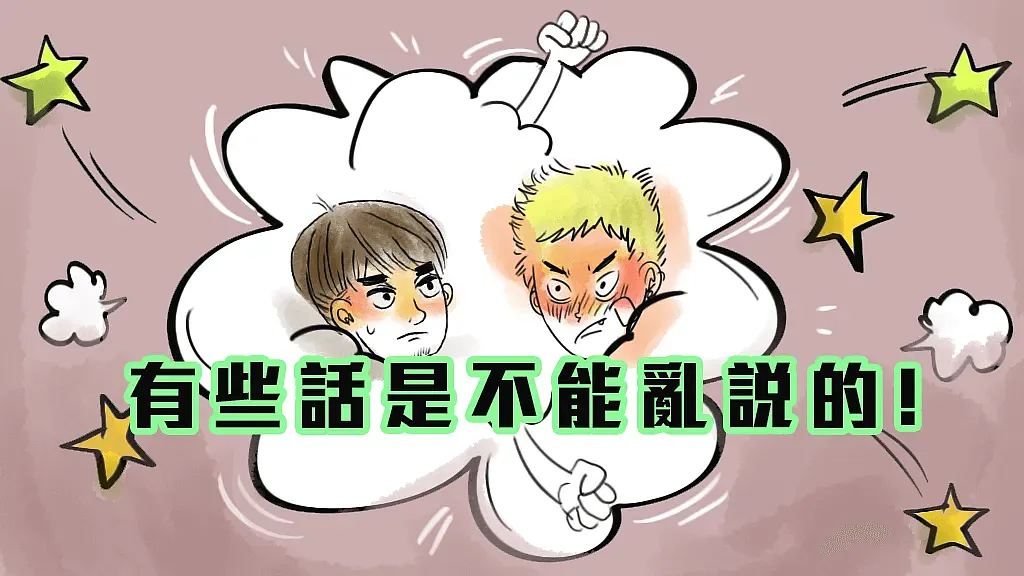
Tu P'ing was feeling really depressed because his mission assignment from T'ai-sheng failed last time (EP13), and later on (EP14), he was even stopped and searched while grabbing braised dishes with a pretty girl. With no other choice, he kept sitting at a stir-fry restaurant chugging beer, trying to drown the unhappiness in his heart; but perhaps alcohol burns even brighter when it meets fire, as Tu P'ing grew more and more furious the more he drank, and began loudly cursing the police and various events that had happened recently.
Sitting at the next table was Ming-chieh, an overseas student who had just arrived in Taiwan from abroad. Feeling uncomfortable being disturbed by Tu P'ing's loud shouting, he walked over to Tu P'ing and politely said in Mandarin that was not yet very fluent, "Excuse me, could you please keep it down?"
Tu P'ing was stunned for a moment. Looking at Ming-chieh's deep facial features and dark skin, the displeasure in his heart was magnified once again. Therefore, he deliberately imitated Ming-chieh's accent and said, "You lower-class foreigners just love sticking your noses into other people's business, don't you? Is someone as noble as us T'ien-lung residents someone you have any right to talk back to?" Ming-chieh was surprised by Tu P'ing's rudeness, but still patiently replied, "Please don't hurl abuses like that."
Hearing this, the alcohol rushed to Tu P'ing's head, and he cursed harshly at Ming-chieh, "I didn't curse you just now; I just look down on your inferior ethnic group! If you're going to curse, you should do it like this: X%*&@$#O... (insert every curse word you can think of in your head)" Upon hearing this, Ming-chieh shouted in an even louder voice, "How can you go around cursing people arbitrarily?" Tu P'ing replied, "Not only do I dare to curse people, I even dare to hit people!" Casually, he smashed the wine bottle on the table toward Ming-chieh's head...
Legal Issues
- What is discrimination? What does the law provide?
- What is defamation (offenses against reputation)?
- How to request an interpreter during investigation and trial proceedings?
What is discrimination? What does the law provide?
The most common colloquial definition of "discrimination" is "treating equals unequally," where specific individuals are subjected to differential treatment due to special status or factors (such as gender, race, religion, nationality, disability, etc.).
In addition to differential treatment by state public authority, discrimination can also occur between individuals. Therefore, the state implements the right to equality through the enactment of relevant laws.
For example, the Employment Service Act stipulates that employers must not discriminate against job seekers or employed workers on the grounds of race, gender, sexual orientation, age, etc.; the Act of Gender Equality in Employment is also intended to implement the protection of the right to work and the right to equality for men and women receiving equal pay for equal work.
The Immigration Act also abstractly stipulates that no one shall discriminate against persons residing within our country's territory based on nationality, race, skin color, social class, place of birth, and other factors. These legislations aim to eliminate potential discrimination problems in society, and violators may be subject to administrative penalties. However, there are currently no special anti-racial discrimination regulations in Taiwan, such as a "Race Equality Act." In recent years, the awareness of ethnic equality has received increasing attention, and we can look forward to the establishment of more comprehensive anti-discrimination norms in our country in the future.
What is defamation (offenses against reputation)?
Being scolded for no reason definitely brings a sense of displeasure, and one might want to seek justice through the court! But what are the legal liabilities for scolding someone?
Under the Criminal Code, "scolding someone" affects a person's social standing and reputation. Therefore, the Criminal Code contains a chapter on "Offenses Against Reputation" (妨害名譽). However, offenses against reputation is not a single specific crime, but rather a collection of crimes such as "public insult" and "defamation."
So-called "public insult" refers to abstractly reviling someone else in a public place (such as cursing with profanities), making them feel humiliated or unpleasant.
For example, Tripitaka scolds Sun Wukong: "You are Zhu Bajie." But obviously, Sun Wukong is not Zhu Bajie; therefore, Sun Wukong might be able to accuse Tripitaka of public insult.
Since it is a "public" insult, the act must be committed publicly—meaning in a situation where an unspecified multitude of people could potentially hear it. Conversely, if Tripitaka softly whispers into Sun Wukong's ear, "You are Zhu Bajie," with no one else around to hear it, Tripitaka would not constitute public insult. However, it should be noted that with the evolution of times, if Tripitaka posts publicly on Facebook that Sun Wukong is Zhu Bajie and adds "#FeelingMyDiscipleIsGettingFatter," a public insult issue would arise.
So-called "defamation" refers to disseminating specific facts capable of damaging another person's reputation. For example, Zhu Bajie tells everyone that Sun Wukong is valued by Tripitaka because Sun secretly slips red envelopes (bribes) to Tripitaka to secure protagonist prestige. If Zhu Bajie does not merely speak with his mouth, but also uses text or drawings to smear Sun Wukong, the criminal liability will be even heavier.
However, if Zhu Bajie can prove that Sun Wukong indeed had financial dealings with Tripitaka, he will not be punished for the crime of defamation. But if Zhu Bajie's statements solely involve personal private morality and have nothing to do with public interest—for example, digging up dirt on Sun Wukong's promiscuous private life and claiming he is having affairs with the White Bone Spirit, the Spider Spirit, dish soap, etc., which only lets everyone know Sun Wukong is unprincipled and satisfies people's appetite for gossip while doing no good for society as a whole—then even if the matter is true, Zhu Bajie will still be established to have committed the "crime of defamation."
Nevertheless, if an actor's statements under specific circumstances are made in good faith, even if they might infringe upon another person's reputation, they will not be punished. These include the following situations:
- Self-defense, self-justification, or protection of legitimate interests;
- Reports made by public officials in the line of duty;
- Appropriate commentary on matters subject to public criticism;
- Appropriate reporting of accounts concerning central and local government meetings, court sessions, or public assemblies.
How to request an interpreter during investigation and trial proceedings?
What is an interpreter? An interpreter is somewhat like a translator in a courtroom. If a party, witness, or other related person is not fluent in Mandarin, or is deaf and mute, an interpretation personnel is provided in the courtroom to bridge their communication barriers so that their litigation rights and interests can be safeguarded. The Court Organization Act stipulates that local courts, high courts, the Supreme Court, and various prosecutors offices shall establish interpreters.
According to the Judicial Yuan, courts currently provide interpreters for languages including sign language, Hakka, indigenous languages, Cantonese, English, Japanese, Korean, Vietnamese, Indonesian, Thai, Tagalog, Cambodian, Malay, Spanish, Portuguese, French, German, and other languages (though quality and regional completeness still have room for improvement). Courts and prosecutors offices should also proactively inquire whether there is a need to apply for an interpreter when handling individual cases involving persons not fluent in Mandarin or who are deaf and mute.
During the litigation or investigation stage, parties may also cite not knowing Mandarin or being unable to fluently express opinions as grounds to submit an "Application Form for the Use of an Interpreter" to the court or prosecutors office, accompanied by relevant proof (such as copies of a disability handbook, passport, alien resident certificate, etc.) to request the provision of an interpreter.
How the Story Continues
After receiving emergency medical treatment and being discharged from the hospital, Ming-chieh filed a complaint against Tu P'ing with the assistance of the police. During the investigation, the prosecutor questioning Ming-chieh also proactively provided a foreign-language-proficient interpreter to assist Ming-chieh in expressing himself and confirmed Ming-chieh's intention to file a complaint against Tu P'ing.
In the end, the prosecutor decided to institute public prosecution against Tu P'ing for crimes including public insult and injury.
Related Articles
Employment Service Act
Article 5: "To ensure equal employment opportunities for nationals, employers shall not discriminate against job seekers or employed workers on the basis of race, social class, language, thought, religion, political party, place of origin, birthplace, gender, sexual orientation, age, marital status, appearance, facial features, physical or mental disability, or past trade union membership; where other laws provide otherwise, those provisions shall govern."
Act of Gender Equality in Employment
Article 1: "This Act is enacted to guarantee the equality of sexes in employment rights, to implement the constitutional spirit of eliminating gender discrimination, and to promote substantive equality of gender status."
Immigration Act
Article 62: "No person shall engage in discriminatory acts against people residing in the Taiwan Area based on factors such as nationality, race, skin color, social class, or birthplace. Where rights are unlawfully infringed upon due to discrimination under the preceding paragraph, except as otherwise provided by other laws, complaints may be filed with the competent authority depending on the circumstances of the infringement. Matters such as the requirements, procedures, and composition of the review panel for complaints under the preceding paragraph shall be prescribed by the competent authority."
Criminal Code
Article 309: "A person who publicly insults another shall be sentenced to detention or a fine of not more than 300 yuan. A person who commits the crime of the preceding paragraph by violence shall be sentenced to imprisonment for not more than one year, detention, or a fine of not more than 500 yuan."
Article 310: "A person who, with intent to disseminate to the public, points out or recounts anything which may impair the reputation of another commits the crime of defamation and shall be sentenced to imprisonment for not more than one year, detention, or a fine of not more than 500 yuan. A person who commits the crime of the preceding paragraph by spreading text or drawings shall be sentenced to imprisonment for not more than two years, detention, or a fine of not more than 1,000 yuan. A person who can prove the truth of the defamatory statement shall not be punished. However, this shall not apply to matters involving private morality which are unrelated to public interest."
Article 311: "A person who makes statements in good faith under any of the following circumstances shall not be punished: 1. Out of self-defense, self-justification, or protection of legitimate interests. 2. Reports made by a public official in the line of duty. 3. Appropriate commentary on matters subject to public criticism. 4. Appropriate reporting of accounts concerning central and local government meetings, court sessions, or public assemblies."
Court Organization Act
Article 98: "If a party to a litigation, a witness, an expert witness, or any other related person is not conversant with the national language, an interpreter shall translate; if such person has a hearing or speech impairment, besides being interpreted by an interpreter, they may also, at their option, be interrogated in writing or ordered to make a statement in writing."
This article is an AI-generated translation of the original Chinese text. In the event of any discrepancy, the Chinese version shall prevail.
