
Is Judicial Authority More Important, or Human Life?
Last edited: 2026-11-08
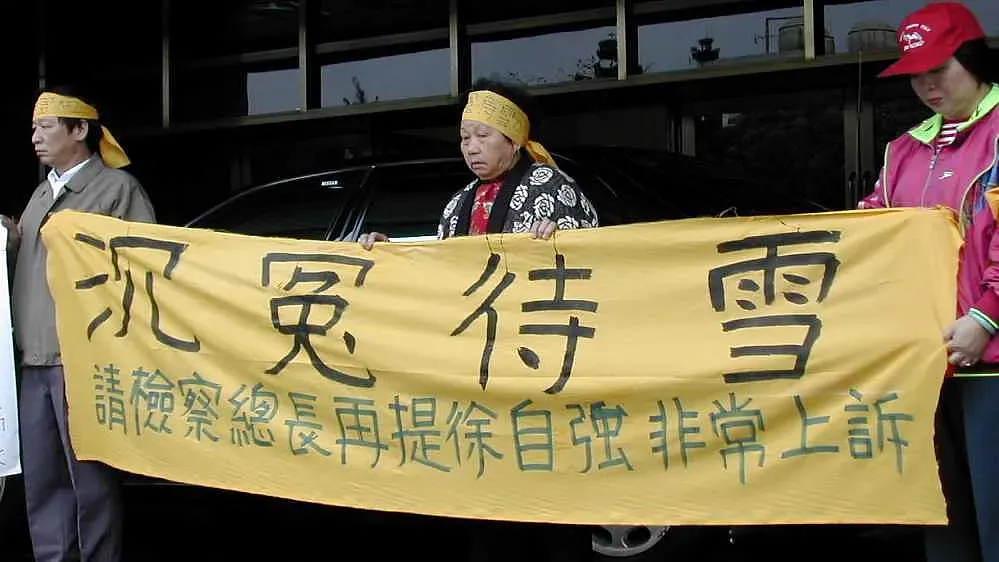
In the death penalty case of Hsu Tzu-chiang, in which the Control Yuan's investigation identified specific errors and the Prosecutor-General consequently filed an extraordinary appeal on his behalf, newspapers report that the Supreme Court has recently dismissed the extraordinary appeal, leaving Hsu at risk of execution at any moment. Although Hsu's defense lawyers immediately prepared a petition asking the Prosecutor-General to file another extraordinary appeal as soon as they learned of the dismissal, and plan to submit it within days, after the experience of the Lu Cheng case everyone who has followed this case fears that the Ministry of Justice has no intention of giving Hsu a chance and will carry out the execution before the petition for an extraordinary appeal is decided.
It is a truly hard fact to accept: our judiciary does not respect human life. It values its own authority far more than human life.
Setting aside the debate over abolishing the death penalty, and given that Taiwan still has the death penalty, if a lawful investigation proves beyond reasonable doubt that a defendant committed a crime deserving death and the evidence is conclusive, then perhaps it can be said after a final judgment and execution that the defendant met a deserved end. But if the death sentence itself is full of doubts, such that readers can never dispel the suspicion that the defendant has been wronged, then even if the judgment is final, rushing to execute before these flaws and doubts are resolved cannot escape the concern of killing an innocent person. How is such a judiciary any different from a killing machine? Hsu Tzu-chiang's death sentence is exactly such a case.
Hsu Tzu-chiang was accused of kidnapping for ransom and deliberately killing the victim together with three accomplices. One accomplice fled and died in Thailand; the other two, after being caught, implicated Hsu, who turned himself in after a warrant was issued for his arrest. From the first instance on, all three were sentenced to death. The Supreme Court remanded the case several times because, apart from the two accomplices' confessions consistently implicating Hsu, there was no other concrete evidence proving his involvement. The two accomplices' accounts of Hsu's role were not only inconsistent over time but contradicted each other (for example, they first said Hsu took part in the killing; after Hsu presented an alibi, they changed their story to say he stayed at the kidnapping scene wiping off fingerprints; Accomplice A said Hsu and Accomplice C killed the victim, while Accomplice B said Accomplice C did it alone). Worse, the accomplices' statements were plainly contrary to the facts in many places (for example, both claimed Hsu did not make the ransom calls because he knew the victim's family and feared being recognized, yet the victim's father and wife testified in court that they did not know Hsu). Using such flawed accomplice confessions as the sole evidence for conviction, without any corroborating evidence to prove them true (the Supreme Court remanded the case several times for this reason, and repeated retrials never found corroborating evidence), there is clearly still ample reason to suspect that Hsu was wrongly implicated by the two accomplices out of personal grudges (as the Control Yuan's investigation report also pointed out).
Before the doubts about the two accomplices' confessions against Hsu have been cleared up, is the judiciary really determined to take the life of a man who may be innocent? Which is worth more, human life or judicial authority? This is a choice between justice and a killing machine. Unless we believe that cases with final judgments can never be wrongly decided, the answer should be clear. Only reasoned judgments that persuade the public can build judicial authority. Refusing to face public doubts and hiding behind "I'll do my job as I see fit" builds nothing but arrogance and irresponsibility.
Judiciary, spare his life; get the facts straight first.
This article is an AI-generated translation of the original Chinese text. In the event of any discrepancy, the Chinese version shall prevail.
