
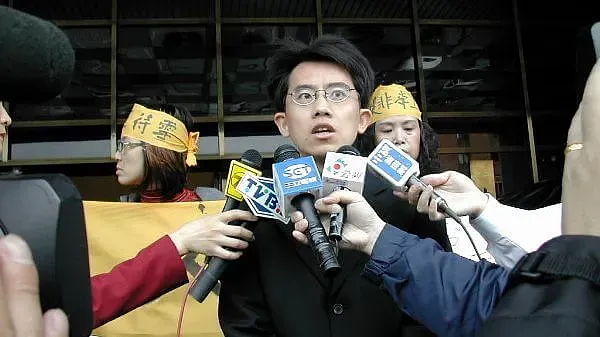
The Abyss of Justice: Reflections on the Dismissal of the First Extraordinary Appeal in the Capital Case of Hsu Tzu-chiang
Last edited: 2026-11-08
Amidst bustling political news and colorful social news, the March 22, 2002 edition of the United Daily News quietly reported that the extraordinary appeal filed in the kidnapping and extortion case of Hsu Tzu-chiang had been dismissed by the Supreme Court. Although inconspicuous in layout, this meant that Hsu Tzu-chiang, currently detained, would immediately face the execution of the death penalty.
Perhaps too much time has passed since the incident occurred on September 1, 1995, and not many people remember the ins and outs of the case. Only the eternal grief of the victim's family, as well as the profound despair of Hsu Tzu-chiang—who is trapped behind bars—and his loved ones, will be stirred once again to the deepest parts of their hearts by this report.
Did Hsu Tzu-chiang actually participate in the crime of kidnapping for ransom? Before discussing this, two premises must first be confirmed: First, Hsu Tzu-chiang had a definite alibi at the time the victim was abducted and murdered. Second, Hsu Tzu-chiang never made any phone calls to extort the victim's family. All extortion calls made by the perpetrators to the family that were recorded by the police were confirmed not to have been made by Hsu Tzu-chiang. The aforementioned premises have been verified and established by the courts at all levels.
Then what is the basis upon which the court convicted Hsu Tzu-chiang of participating in the crime, and even sentenced him to death? In fact, it rests solely on the confessions (statements admitting to the crime) of two co-defendants who were apprehended in the same case. They repeatedly claimed that Hsu Tzu-chiang participated in the conspiracy and planning of this case, and that Hsu Tzu-chiang had once rented a car for the other accomplices. This is the inescapable shackles that have caused Hsu Tzu-chiang to be repeatedly sentenced to death. However, is such evidence sufficient, without the need to examine other evidence proving Hsu Tzu-chiang's commission of the crime, for the court to sentence Hsu Tzu-chiang to death without the slightest doubt that other possibilities might exist in this case?
Legally speaking, this is not the case. According to Paragraph 2, Article 156 of the Code of Criminal Procedure, even if an accused has confessed, other necessary evidence shall still be investigated to ascertain whether it is consistent with the facts. In addition, Supreme Court Precedent 31-Shang-2423 also holds that while the statements of a co-defendant may be adopted as evidence of another co-defendant's crime, such incriminatory statements must still be accompanied by the investigation of other necessary evidence to see if they are consistent with the facts, and findings of the other co-defendant's criminal facts cannot be established based solely on such statements. Looking at the legislative purpose of the above, it is intended to guarantee the authenticity of a confession through corroborative evidence other than the confession itself, restrict the evidentiary value of a confession, and prevent the court from placing undue weight on confessions while neglecting the investigation of other evidence, thereby running the risk of miscarriages of justice. This is because a confession by an accused may possibly be erroneous due to memory lapses, errors in subjective cognition, or individual subjective biases and emotions, and there is even the danger of making false statements to shift blame onto others. Therefore, the confession of an accomplice cannot serve as the sole criminal evidence to establish the crime of another accomplice. Clearly, although the court harbored strong suspicions against Hsu Tzu-chiang due to the statements of other accomplices, it sentenced Hsu Tzu-chiang to death without any solid corroborative evidence proving that he committed the crime—a blatant violation of Paragraph 2, Article 156 of the Code of Criminal Procedure.
Furthermore, in terms of reason and logic, the confessions of the other accomplices are not without contradictions that make it impossible for one to be fully convinced. To briefly outline the main points: First, the first defendant to be caught shifted all responsibility entirely onto other individuals who had not yet been apprehended, falsely claiming that Hsu Tzu-chiang participated in the entire process of kidnapping for ransom and asserting that the victim was murdered by Hsu Tzu-chiang. It was only after the second suspect was apprehended, and after Hsu Tzu-chiang's family presented an alibi regarding the time of the victim's death, that he altered his statement to claim that Hsu Tzu-chiang went back halfway to wipe away fingerprints, and that the victim was not murdered by Hsu Tzu-chiang. Second, the court once questioned the reason why Hsu Tzu-chiang had never called to extort the victim's family; the other accomplices explained that because the victim's family knew Hsu Tzu-chiang, they were afraid his voice would be recognized and therefore did not let him make the calls. However, when the victim's parents and spouse appeared in court to testify, they all consistently stated that they did not know Hsu Tzu-chiang at all. Third, one of the accomplices had explained to Hsu Tzu-chiang's family before being apprehended that Hsu Tzu-chiang had not participated in the crime. Fourth, the other accomplices could never satisfactorily explain why Hsu Tzu-chiang, on the day of the incident during working hours at 9 o'clock, would openly wipe fingerprints on the street, or how he traveled from the crime scene in Tachih back to his residence in Kueishan, Taoyuan. Fifth, regarding the rental of the car, out of fear of exposing their identities, the other accomplices stole a car to commit the crime and claimed they had asked Hsu Tzu-chiang to rent a car on their behalf. Hsu Tzu-chiang is not foolish; had he participated in the crime, how could he possibly have used his real identity to rent a car and expose his identity? In addition, regarding the time, process, tools, and vehicles of the crime, the other two accomplices were inconsistent with each other, resulting in numerous contradictions. How could such confessions generate firm conviction and subsequently be used to sentence Hsu Tzu-chiang—who has repeatedly proclaimed his innocence—to death?
During the litigation proceedings, the court was not without awareness of the aforementioned doubts. Therefore, when the case was first appealed to the Supreme Court, the Supreme Court had previously required the High Court to investigate whether there was corroborative evidence for the accomplices' allegations implicating Hsu Tzu-chiang, as well as the numerous contradictions in the accomplices' statements. Unfortunately, after the court repeatedly remanded the case for retrial, no other evidence concerning Hsu Tzu-chiang's involvement was ever found. In the end, perhaps because the accusations made by the other accomplices were too fierce, or because the criminal acts in this case were too appalling, evidence such as Hsu Tzu-chiang's alibi, the fact that he had never made an extortion call, and his financial disputes with the other accomplices failed to enable the judges to dispel the suspicions in their hearts against Hsu Tzu-chiang. Thus, under the banner of justice, the legal provisions regarding so-called corroborative evidence, the flaws in the accomplices' confessions, and the intent of the Supreme Court's remands all became insignificant. The Fifth Remanded Retrial still sentenced Hsu Tzu-chiang to death, and under the exact same reasoning, the Supreme Court unexpectedly forgot the doubts it had previously uncovered and no longer remanded the case for retrial, thereby finalizing the death sentence.
Right at the moment when Hsu Tzu-chiang was facing the death penalty, his family, the Judicial Reform Foundation, and other individuals concerned about this case still worked tirelessly and ran about, drawing social attention. The Control Yuan also intervened to investigate the case and discovered that there were indeed multiple flaws in evidence collection. Prosecutor-General Lu Jen-fa of the Supreme Prosecutors Office also filed an extraordinary appeal on the grounds that the judgment was contrary to law. Consequently, Hsu Tzu-chiang rekindled a glimmer of hope for justice. However, just as everyone expected the Supreme Court to remand the case for a retrial so that it could be investigated in detail once again, the result was negative, and Hsu Tzu-chiang once more faced the abyss of the death penalty.
Some people may believe that the punishment of criminals is the manifestation of justice and that cases should be finalized as early as possible to comfort the soul of the victim in heaven. But is this really the case? After a meticulous review of all case files and evidence, can one be one hundred percent certain that Hsu Tzu-chiang participated in the kidnapping and extortion of this case, and dare to execute Hsu Tzu-chiang without the slightest hesitation or any doubt whatsoever? I am afraid one cannot be so certain. It is very likely that after the death penalty is carried out, rather than practicing justice, it will instead make Hsu Tzu-chiang yet another victim of the judicial process. I believe the victim in the netherworld cannot find solace through the grievance suffered by Hsu Tzu-chiang.
Furthermore, back on June 24, 1996, even though Hsu Tzu-chiang clearly knew that the other accomplices had been sentenced to death by the Shihlin District Court, he was still willing to surrender himself voluntarily to clarify the facts of the case. At that time, the reasons and courage that made him believe justice could restore his innocence are probably too unbearable to look back upon, leaving behind only despair toward justice and equity. However, if we knowingly execute a case involving doubts and the death penalty in such an unclear manner, turning a blind eye to the possibility of a miscarriage of justice, what is the meaning of justice? Especially since life cannot be relived, replaced, or compensated for, the judiciary should even less allow room for doubt. We must not let judicial negligence cause any individual personal harm. We earnestly implore the Prosecutor-General of the Supreme Prosecutors Office to file another extraordinary appeal, hoping that the court can have the opportunity to ascertain the truth. At the same time, this is also an opportunity to truly manifest justice, allowing society to witness the progress and true essence of the judiciary.
This article is an AI-generated translation of the original Chinese text. In the event of any discrepancy, the Chinese version shall prevail.
