
Where Exactly Are Monsters Bred? A Response to Judge Wang Tzu-jung
Last edited: 2026-08-24
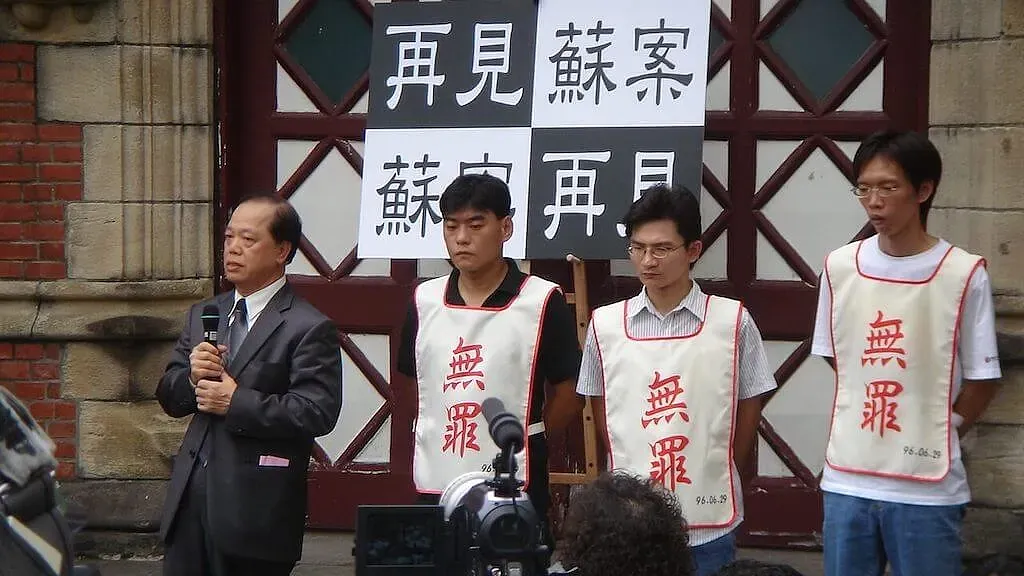
On April 8, 2017, Judge Wang Tzu-jung of the Yunlin District Court published an article in the Apple Daily Forum titled "Monsters and Where to Find Them? On the Legal Professionals Evaluation Foundation," alleging that the JRF's advocacy for establishing a Legal Professionals Evaluation Foundation stems from a sense of entitlement regarding the Legal Aid Foundation's operational model, harboring self-interested motives to create another monster to mutually support legal aid. Furthermore, he cited the case where the JRF requested the evaluation of the judge assigned to Su Chien-ho and two others' application for criminal compensation (erroneously referred to as state compensation in Judge Wang's article)—a request deemed unfounded by the Judges Evaluation Committee (Decision No. 4 of the 2015 Evaluation Decisions)—to accuse the JRF of abusing evaluation referral procedures.
Whether to establish a Legal Professionals Evaluation Foundation to improve the current evaluation systems for judges and prosecutors is a public issue worthy of discussion in the public forum, and the author holds no particular stance. However, aside from the aforementioned dismissed evaluation request by the JRF, does Judge Wang have any other substantive arguments or evidence to support slapping the JRF with conspiracy theories while dragging legal aid into the mix? Judges should speak and act with caution, avoiding inappropriate behaviors or actions easily perceived as damaging to the judiciary's image; in activities outside their official duties, they must not impair the independent, fair, impartial, incorruptible, and upright image of the judiciary or judges (refer to Articles 5 and 18 of the Code of Judicial Ethics). Without any evidence, hurling conspiracy theories to label the JRF—does such conduct risk undermining the fairness and integrity of the judiciary?
The criminal compensation application case of Su Chien-ho and two others cited by Judge Wang was handled with the author acting as counsel for the applicants. Although the author serves as a Standing Executive Committee Member of the JRF, the author did not file a grievance regarding this case with the JRF, nor did the author participate in the JRF's internal deliberation process concerning this case, having only provided the court hearing recordings to the JRF upon their request. To prevent any regret arising from a biased perspective, it is necessary for the author to recount the actual proceedings at the time, providing the public with material to judge whether the JRF abused evaluation referrals, and serving as food for thought on whether room for improvement exists within the Judges Evaluation Committee.
According to Article 213 of the Code of Civil Procedure, records of oral argument must set forth the essentials of the argument's progress; therefore, transcripts must legally be recorded in court based on actual proceedings. Although current practical trends heavily favor court clerks pre-filling transcripts prior to the hearing based on a judge's instructions regarding scheduled procedures, testimonies of those present are still supposed to be recorded as they occur during the hearing. A practice like the one in this case, where even the statements of parties and lawyers were pre-written and then handed over by the clerk for lawyers to confirm, was something the author had never encountered prior to that hearing, nor since. Thus, there was indeed a strong feeling of "What kind of trick is this?" at the time.
The author understands that the judge's purpose in doing so was to prevent the statements of the parties and lawyers from straying outside his pre-prepared transcript (as evidenced by the hearing recording where he stated: "You can say as much as you want, because it's already written down, you understand this right, but don't stray beyond this scope, because it makes it difficult for the court clerk to present the transcript"). However, does not such a practice restrict the rights of parties and lawyers to make statements? How could the author help the judge pass along a pre-written transcript for the client to confirm? Because the author did not do so that day, the judge rebuked the author for dereliction of duty, yet denied that he was scolding the lawyer (whether telling a lawyer they are derelict in their duty constitutes a reprimand is left for the public to judge). Would this not make one feel disoriented? In court, for the sake of their client's interests, lawyers confronting a judge whose words induce such mental confusion have no choice but to swallow their grievances and make statements according to the transcript.
The real flashpoint triggering the conflict occurred when Su Chien-ho, during his final supplementary statement, expressed a wish to use a portion of the compensation for public welfare. Prompted by these remarks, the judge asked him to confirm: "Are you refusing this money?" "Are you three taking this money back to stuff into your own pockets—to put it in plain terms—or are you three going to donate this money for general social welfare use, or even donate it to a specific foundation?" The judge had this recorded in the transcript, required Su Chien-ho and the other two to sign and confirm this entry, and stated that "this is very closely related to the compensation discretionary amount determined by the court."
How Su Chien-ho chooses to use his compensation is entirely his own business. The Criminal Compensation Act has never stipulated that compensation amounts can be measured by whether a victim of a miscarriage of justice dedicates their compensation to public welfare. The judge invented a standard absent from the law and forced Su Chien-ho and the two others to sign and confirm it—was this not an abuse of power?
At that time, the author and fellow counsel, Attorney Hsu Wun-Pin, could no longer bear it and demanded that the judge also record all these statements he had made into the transcript. He prevaricated, even claiming that Su Chien-ho's expressed wish amounted to a waiver, acknowledgment, withdrawal, or settlement under the Code of Civil Procedure (pardon the author's dull intellect, for the logic behind these words eludes me to this day). Consequently, after several rounds of back-and-forth, the author had no choice but to request a copy of the court hearing recording, subsequently producing a transcript to be attached to the court file. During the nearly hour-long exchange that followed, the judge first demanded the author specify under which legal provision a copy of the hearing recording could be requested. Upon hearing the author state that a written application specifying the legal basis would be submitted, he shifted gears and demanded that the author read his own written work, "Reflections on Japan's Ashikaga Incident" (which he claimed to be a classic work) and a certain judgment, asserting that one must not criticize him without reading them first (in reality, the author had merely requested a copy of the recording at that point and had not criticized him). Throughout this process, he repeatedly attempted to persuade the author to abandon the application for a copy of the recording. Seeing that the author remained unmoved, he finally relented, but demanded that the author and Attorney Hsu "must not make inaccurate descriptions targeting a specific judge."
Did not the judge's continuous self-aggrandizement in court impair the fair and solemn image of the judiciary? And did not attempting to persuade counsel to withdraw the recording request through such means constitute an abuse of litigation command powers (where lawyers cannot leave until the judge adjourns the court, forcing them to endure his endless monologue) and thereby undermine public trust in the judiciary?
The Judges Evaluation Committee did not summon the author, Attorney Hsu, or Su Chien-ho to state their opinions. Judging from the content of the resolution dismissing the evaluation request, the Committee remained completely oblivious to the judicial ethics issues raised by the author above. Does not such an Evaluation Committee stand in need of reform?
※ This article was published in the Apple Daily on April 8, 2017
Attachments
Request for Evaluation against Judge Shih Chun-yao Filed by Su Chien-ho et al.
Decision No. 4 of the 2015 Evaluation Decisions
Criminal Compensation Decision No. 36 of 2012 by the Taiwan High Court
Transcript of the Court Hearing Recording for Criminal Compensation Case No. 36 of 2012
This article is an AI-generated translation of the original Chinese text. In the event of any discrepancy, the Chinese version shall prevail.
