
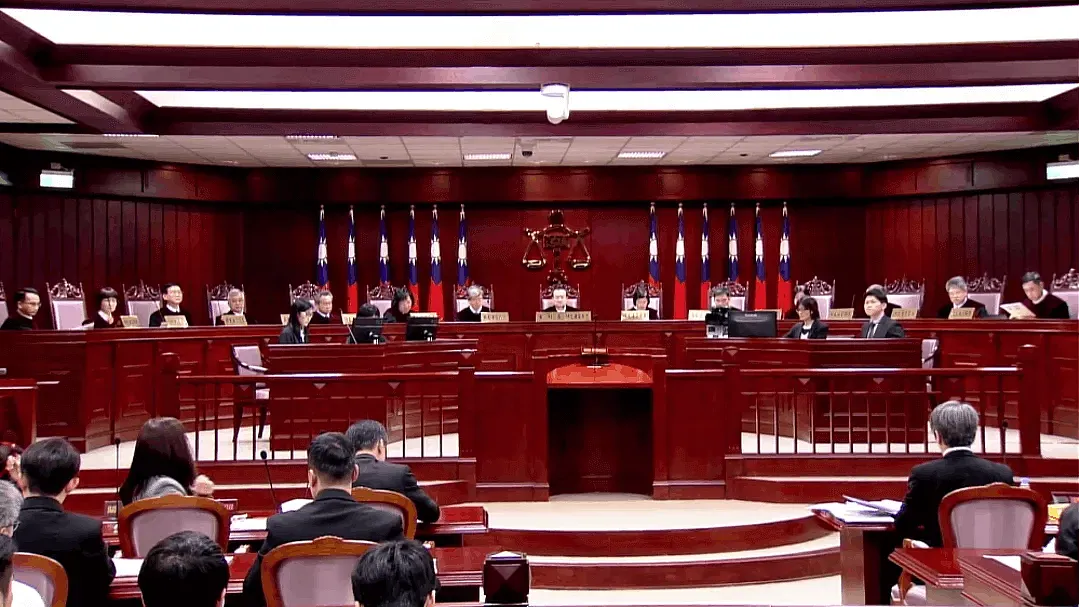
"Constitutional Court Procedure Act" is Coming: Everyone is Protected by the Constitution to Truly Realize Judicial Reform
Last edited: 2026-11-05
Promulgated in 1958, the Constitutional Interpretation Procedure Act underwent its first comprehensive amendment in 1993, and 25 years have passed since. The Legislative Yuan is scheduled to hold caucus consultations on the draft amendment to the Act this Tuesday (12/11). If successfully passed, the draft will be thoroughly revamped and emerge under the new name of the "Constitutional Court Procedure Act." Public expectations for the Grand Justices as the cornerstone of human rights protection are exceptionally high, making this legislative amendment the subject of intense focus. Looking at the current draft, however, it still falls short of comprehensively protecting citizens under the Constitution. We hope that the Legislative Yuan will give us a "Constitutional Court Procedure Act" that firmly defends constitutional values and protects fundamental rights.
First, the draft stipulates that when a law is declared unconstitutional with delayed invalidation, courts at all levels shall, as a principle, continue to apply the unconstitutional law in ongoing trials. However, an unconstitutional law is precisely a law that infringes upon citizens' fundamental rights; for every day it continues to exist, the constitutional order is undermined for another day. Therefore, many scholars hold that, as a rule, courts should apply laws in accordance with the views expressed in the judgments of the Constitutional Court, rather than continuing to apply unconstitutional laws.
J.Y. Interpretation No. 725 has already stated that delayed invalidation is intended to "urge competent authorities to enact legislation prudently and thoroughly so as to comply with the intent of this Court's interpretation, yet it does not affect the essence of this Court's declaration that a statute is unconstitutional." Scholars also consider delayed invalidation to be a demand for the legislature to amend the law within a time limit, while unconstitutionality serves as a declaration directed at law-applying organs, including administrative agencies and courts, prohibiting them from continuing to apply unconstitutional statutes. Consequently, the provisions of the draft clearly fail to align with the intent of the Grand Justices' interpretations.
Furthermore, the draft stipulates that individuals must exhaust all remedies before they can apply for a constitutional review of legal norms. The petitioner in the original case who obtains a constitutional judgment of delayed invalidation can benefit from it directly; but the draft prevents parties in other cases still on trial from relying on the judgment and forces courts to keep applying the unconstitutional law to them, which is profoundly unfair.
Moreover, the draft's system of constitutional review of court judgments allows individuals to apply for constitutional review when a court judgment conflicts with the Constitution. However, this system cannot be applied retroactively to judgments rendered prior to the entry into force of the draft, leaving past unconstitutional judgments—especially grave criminal miscarriage of justice cases involving severe infringements on citizens' rights to life or liberty—trapped in a predicament where they can never obtain a remedy.
Taking the Chiou Ho-shun case as an example, the judgment in the eleventh trial after remand stated: "The disadvantage of lost evidence should not be borne by the victim and their family members." This clearly violates the presumption of innocence, the right of access to the courts, and the due process of law protected by the Constitution. Yet, because the draft does not apply retroactively, Chiou Ho-shun—who was sentenced to death by an unconstitutional judgment—is left without a remedy.
When weighing legal stability against vital fundamental rights such as people's lives and liberties, the demands of legal stability should be moderately balanced. In addition, the Judicial Yuan worries that if the door to retroactivity is opened, the Grand Justices might become overburdened. However, past legislative practices involving retroactivity—including the statutory property regime between husband and wife, lawsuits to disavow parentage, and payment orders—never caused court operations to be paralyzed by the volume of cases following the passage of new laws. Furthermore, the draft already establishes high thresholds as countermeasures for applying for the constitutional review of court judgments, such as imposing a two-month application period, mandatory attorney representation, a review panel mechanism, and dismissing applications without stating reasons. Thus, worries about paralyzing the courts appear all the more superfluous.
Taiwan is currently actively promoting transitional justice. When overturning thousands of unlawful judgments rendered during the period of authoritarian rule, volume is by no means a justification for refusing to hear cases. If one stubbornly insists on ignoring the continued unconstitutional existence of such judgments because "too many" judgments would be brought for constitutional review, the protection of people's rights by the Constitutional Court Procedure Act risks being reduced to mere lip service.
※ Originally published in Apple Daily Real-Time News on Dec. 10, 2018
This article is an AI-generated translation of the original Chinese text. In the event of any discrepancy, the Chinese version shall prevail.
