
Judicial Reform Must Begin with Ensuring Judges' Integrity – Statement on the Control Yuan's Investigation into Former Commission for Discipline of Public Functionaries President Shih Mu-ch'in
Last edited: 2026-07-27
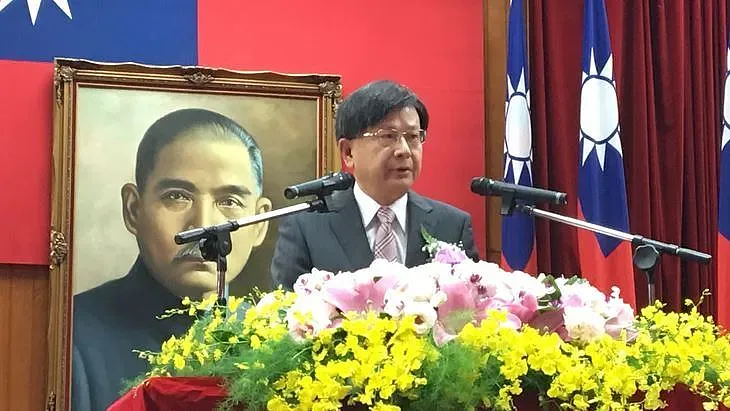
Photo Credit / CNA
Former Commission for Discipline of Public Functionaries President Shih Mu-ch'in was heavily involved in violations of the Judges Act. On the 17th, the Personnel Review Committee of the Judicial Yuan resolved to directly refer the case to the Control Yuan. Control Yuan Members Lin Ya-feng, Wang Mei-yü, Ts'ai Ch'ung-i, and Kao Feng-hsien subsequently applied for suo motu investigations on the 18th and 19th respectively. Judicial reform must begin with ensuring the integrity of judges. This Foundation calls upon the Control Yuan to conduct a comprehensive review of all judicial personnel involved, to spare no one while avoiding injustice, and to restore public trust in the judiciary. The details are explained as follows:
-
A Judge's Personal Conduct Affects the Entire Judicial System
Article 103 of the Commentary on the Bangalore Principles of Judicial Conduct, the international standard for judicial ethics, states: "A judge shall maintain high standards in public and private life. The rationale for this requirement is that a judge may be called upon to make judgments on a wide range of human experience and conduct. If a judge's private conduct is publicly condemned, the judge will be perceived as a hypocrite, which will inevitably lead to a loss of public confidence in the judge and, potentially, a general loss of confidence in the judiciary." Ensuring the integrity of judges in both their public and private lives is a foundational principle for maintaining public trust in the judiciary.
Former President Shih Mu-ch'in's involvement in accepting banquet hospitality and entertainment from friends, providing legal advice, trading shares in a friend's company without statutory reporting, and other related matters has severely undermined public trust in the judiciary. (Cf. Judicial Yuan Press Release, Sept. 17). The solution now is for the Control Yuan to conduct a thorough investigation, ascertaining whether—aside from private socializing and investment activities—there was any improper lobbying or intervention in cases, thereby restoring the truth of the events. If there are violations of law or dereliction of duty, the case should be referred to the Disciplinary Court for adjudication. Through the exercise of the power of control, public trust in the judiciary can be rebuilt.
-
The Code of Judicial Ethics Prohibits Judges from Providing Legal Assistance to Friends
Article 24 of the Code of Judicial Ethics, enacted by the Judicial Yuan, provides: "A judge shall not practice law and shall avoid acting as an assistant. However, this shall not apply to providing gratuitous legal consultation or drafting legal documents for family members or relatives. In the circumstances of the proviso of the preceding paragraph, except for family members, a judge shall inform such relatives that they should seek other formal professional consultation or legal services." When this provision was drafted during the Judicial Yuan's "Code of Judicial Ethics Drafting Workshop," consideration was given to whether Article 84 of the Hong Kong Guide to Judicial Conduct should be referenced to expand the scope of permissible legal assistance provided by judges—beyond relatives—to "close friends." Ultimately, the majority of the committee members concluded that the connotation of "close friends" is difficult to define and resolved to prohibit judges from providing legal assistance to friends. (Cf. Ts'ai Chiung-tun, Judicial Ethics Code and Practice, p. 202)
Former President Shih Mu-ch'in issued a statement on September 17 titled "Being a Judge Cannot Be Without Humanity," arguing: "I believe all judicial officers have similar life experiences; when you become a judicial officer and friends or relatives encounter trouble and become involved in litigation, the very first person they think of is you, the judicial officer... I simply did not want to be a judge to the point of losing my humanity, avoiding friends and relatives involved in litigation as if they were plagues." Conflating relatives and friends not only violates Article 24 of the Code of Judicial Ethics, but also misleads the public into thinking that judges may privately provide legal assistance to friends. Former President Shih failed to reflect or apologize and instead misled the general public, inflicting secondary harm on judicial trust. It is imperative that the Control Yuan investigate and hold him accountable.
-
Comprehensive Review of Involved Personnel to Ensure Judicial Integrity
According to media reports, more than a dozen other judges have attended banquets and played golf with former President Shih Mu-ch'in's friends, and the judges and prosecutors handling those friends' cases are also suspected of facing improper contact or lobbying. The Control Yuan should comprehensively investigate all judicial personnel involved, spare no one while avoiding injustice, clear the innocent of wrongdoing, and hold the unlawful accountable.
In March of this year, Chief Prosecutor P'eng K'un-yeh of the Taiwan Taoyuan District Prosecutors Office was involved in an improper lobbying case, which severely damaged public trust in the judiciary. After the Ministry of Justice's Prosecutors Personnel Review Committee referred the entire case to the Control Yuan on April 12, the Control Yuan has yet to publish its investigation results and has yet to address public skepticism toward the judiciary. Now, the case of former President Shih Mu-ch'in has arisen, causing even greater damage to judicial trust than the P'eng case. A succession of judicial integrity scandals has nearly dismantled the public trust that judicial reform has fought to revive over the past few years, serving as a reminder to Taiwanese society that judicial reform must begin with ensuring judicial integrity; otherwise, no amount of institutional modification can salvage public trust in the judiciary.
| Date | Event |
| 2019/08/29 | Judicial Yuan receives the Taipei District Prosecutors Office's official letter dated August 26, 2019, reporting Shih Mu-ch'in |
| 2019/09/11 | Shih Mu-ch'in resigns from his position as President of the Commission for Discipline of Public Functionaries |
| 2019/09/13 | Judicial Yuan issues a press release explaining Shih Mu-ch'in's involvement in improper conduct |
| 2019/09/13 | Shih Mu-ch'in issues a statement claiming to have become a victim of political struggle |
| 2019/09/14 | Taiwan High Court issues a press release explaining that there was no external interference in the Weng Mao-chung case |
| 2019/09/15 | Judicial Yuan issues a press release responding to the Kuomintang (KMT) Legislative Caucus press conference |
| 2019/09/17 | Shih Mu-ch'in issues a statement demanding the Judicial Yuan refer the entire case to the Control Yuan |
| 2019/09/17 | Judicial Yuan Personnel Review Committee resolves to refer Shih Mu-ch'in to the Control Yuan for review |
| 2019/09/18 | Control Yuan Members Lin Ya-feng, Wang Mei-yü, and Ts'ai Ch'ung-i apply for a suo motu investigation into Shih Mu-ch'in's acceptance of improper hospitality |
| 2019/09/19 | Control Yuan Member Kao Feng-hsien applies for a suo motu investigation into Shih Mu-ch'in's improper lobbying in the Weng Mao-chung case |
| 2019/09/20 | Shih Mu-ch'in issues a lawyer's letter to Judicial Yuan President Hsu Tsung-li |
| 2019/09/20 | Judicial Yuan issues a press release responding to Shih Mu-ch'in's lawyer's letter |
This article is an AI-generated translation of the original Chinese text. In the event of any discrepancy, the Chinese version shall prevail.
