
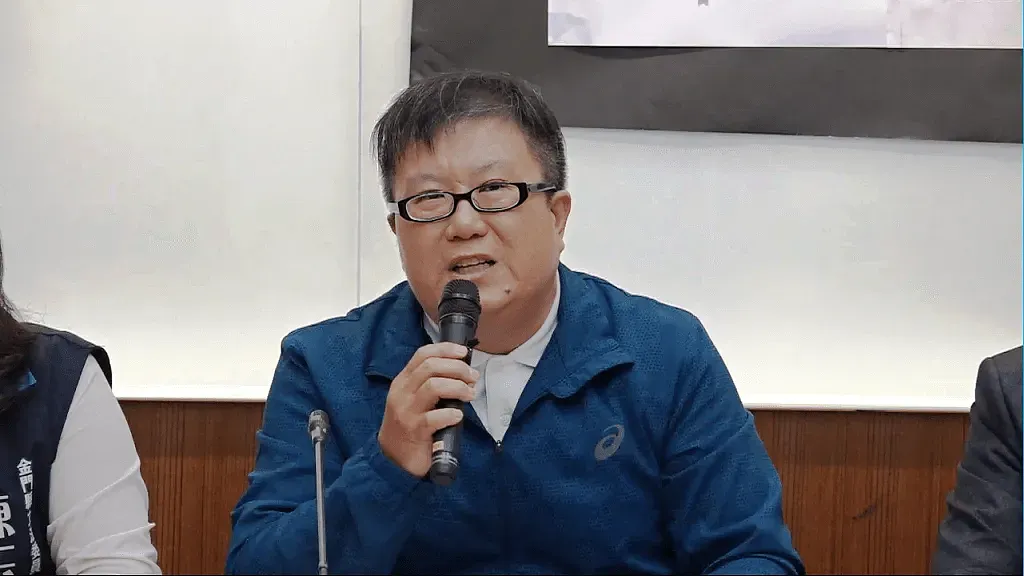
Tai Li-shen: The "Tai Li-shen Clause" fails to protect me, forcing me to be a martyr and sacrifice myself
Last edited: 2026-11-09
I came forward as a whistleblower because I discovered that the way my agency was reimbursing expenses was illegal. Encouraged and accompanied by my superiors in the Civil Service Ethics Office, I blew the whistle. At the time my thinking was simple: "If it's illegal, how can we keep doing it? If I don't speak up, am I supposed to keep helping my superiors embezzle year after year?" My reasoning was simple: if something is illegal, expose it right away.
Exposing illegal conduct should count as doing good, doing the right thing, and helping those who expose wrongdoing should also be doing the right thing. It may not be charity, but at the very least it is a good deed. I truly cannot understand why anyone would oppose doing good.
I remember the ethics officers telling me directly that because I had turned myself in, then reported the matter and blown the whistle, the state would protect me, would definitely protect me, and that I need not worry. I believed them, but everyone can see the result now: I was dismissed and severely disciplined. If the state does not protect me now, I don't know who will dare come forward to blow the whistle in the future.
Ever since I blew the whistle at the end of 2012, I kept petitioning the relevant government agencies, from the Presidential Office to the Agency Against Corruption, to enact a whistleblower protection law as soon as possible. One person's strength is limited. Fortunately, with JRF's help, we finally saw this bill emerge, yet the current draft does not extend protection retroactively to people who have already blown the whistle. I am shocked and deeply regretful.
As I recall, when bills are passed they usually include a transitional clause, or something like a sunset clause, to make up for gaps or shortcomings in the law. I have repeatedly fought for protection to extend to those of us who have already blown the whistle. Even setting retroactivity aside, there should at least be a transitional bridge so that those who have already blown the whistle can receive appropriate state protection and vindication. That is my sincere hope.
Now that the Ministry of Justice is about to legislate, its reasons for refusing to include me, Tai Li-shen, in the protection are legal stability and non-retroactivity. There is a "Tai Li-shen Clause," yet it cannot protect the very person who truly needs protection; they insist on making me a martyr, which I absolutely cannot accept. When I clearly could be saved, why not lend a hand? Why insist on making me a martyr and having me sacrifice myself? Since they are already legislating, why not help where help is possible? I truly beg everyone to help those of us who have blown the whistle, and to monitor the government so that it legislates more thoroughly and completely.
In fact, my recommendation has never been only to protect people who have already blown the whistle. Beyond that, I hope a "whistleblower protection officer" role can be created, not to investigate wrongdoing but to protect those who come forward, because whistleblowers often do not know what hardships and difficulties they will face, so they need a protection officer to help them see it through.
Second, as many legal scholars and professors have also suggested, I hope the bill will allow prosecutors to grant whistleblowers deferred prosecution, because once someone is indicted, the trial process very easily exposes the whistleblower. Being repeatedly summoned and investigated makes it very hard to regain one's composure. That is my experience: it is very hard to recover emotionally, and the psychological pressure is enormous.
Third, I hope the remedy provision in Article 13 will change "may" to "shall." I blew the whistle with your encouragement, so why am I being obstructed when I apply for reinstatement? I find that unreasonable. Once our status as whistleblowers is confirmed, government agencies should accept our applications for reinstatement; only then is the protection real.
Finally and most importantly, I sincerely appeal to all our legislators, the heads of all government departments, and the party caucuses: help as much as you can, and if you face difficulties, at least do not stand up to oppose it. Please add a second paragraph to Article 19 as a transitional clause to help those of us who have already blown the whistle. This is extremely important to us; it is a life-saving remedy. If whistleblowers should not be punished, then those who have already blown the whistle should be punished even less. This clause cannot really be called retroactive. Bills usually have a transitional or sunset clause before they pass; I would call this a "sunrise clause." This is a sunshine law, and it should be made even sunnier. Why does it feel so constrained and hesitant? It could clearly be complete and perfect, yet it is being forced to remain flawed, which I simply cannot accept.
I appeal to everyone with power and authority, regardless of party or political color, to set everything else aside and return to judicial justice in handling the Whistleblower Protection Act. Although it has been renamed the Public Interest Whistleblower Protection Act, I hope the second paragraph of Article 19 can truly be written into the law, so that the act better fulfills its legislative purpose. Thank you all.
This article is an AI-generated translation of the original Chinese text. In the event of any discrepancy, the Chinese version shall prevail.
