
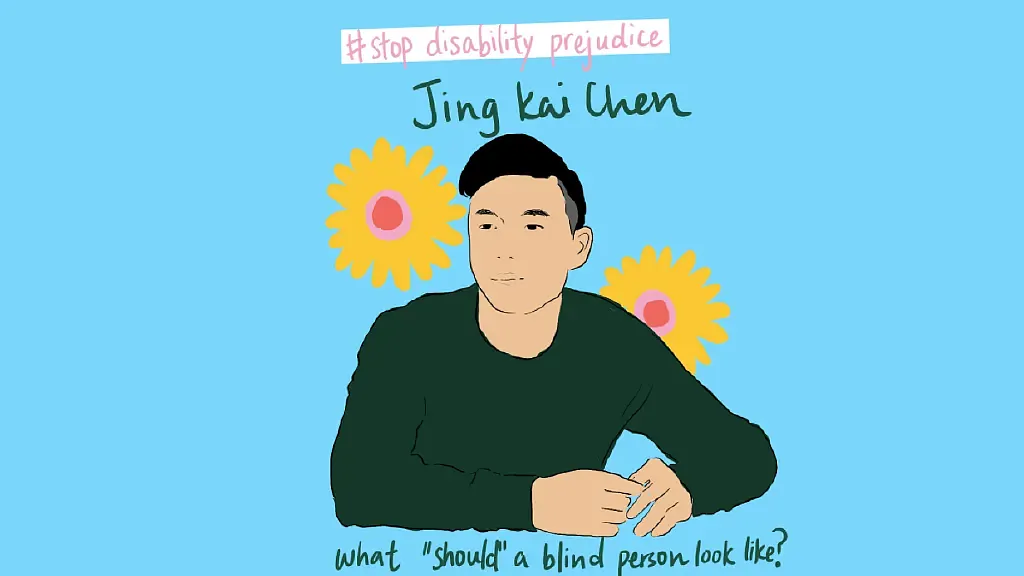
Jing Kai Chen Case Reflection: Visually-impaired doesn't mean disability
Last edited: 2026-11-08
“Visually-impaired doesn't mean disability.”
Meeting Ch'en Ching-k'ai helped me understand what this quote might mean and changed my assumptions about blind people’s potential abilities.
I used to have a stereotypical imagination of blind people: sunglasses, walking sticks (white canes), and guide dogs. But blind people can be lawyers, pianists, singers, and writers. They are sons, daughters, parents, spouses, and siblings, and have different personalities, skills, and aspirations. Because blind people are first people, just like you and me.
For example, Ch'en Ching-k'ai is the awe-inspiring captain and internationally recognized MVP, best offensive player, and best defensive player for Taiwan’s Beep Baseball (baseball for the blind) team. He can bat the ball, play defense, and dash to the base while wearing a light-blocking eye mask, just based on the sound that the ball and base emits. He runs faster with an eye mask on than I am usually able to.
Unfortunately, the first time I saw Ching-k'ai was not on the field, but as an observer in court. This is because Ching-k'ai was accused of faking blindness to commit insurance fraud, even though multiple scientific diagnoses show that Ching-k'ai is indeed blind. The judges dismissed multiple electrophysiological studies (VEP, ERG, EEG), fMRI scan results, psychophysical evidence, and blind rehabilitation specialists’ witnesses in favor of what they thought blind people’s daily actions and athletic abilities should and shouldn’t look like.
I hope this case can bring more awareness to assumptions about blind people and institutionalized prejudice against those with disabilities. Despite the troubles that being “too successfully” reintegrated into daily life has caused him in court, Ching-k'ai still told us: If you know any blind people around you, please recommend them to go to blind rehabilitation centers, and learn strategies that help them use their remaining senses to reintegrate into society. Ching-k'ai’s belief in rehabilitation centers emphasizes the endless possibilities for those who are visually impaired.
Ching-k'ai and his defense lawyer Li Ping-hung, who is the first blind lawyer in Taiwan, shows us that having a disability does not mean that one must be unable in all aspects of life. We can learn so much more from blind people’s abilities than just their disability.
That Ching-k'ai is able to look forward and live on today despite facing so many challenges and painful experiences is one thing that I really look up to and hope to learn from.
This article is an AI-generated translation of the original Chinese text. In the event of any discrepancy, the Chinese version shall prevail.
