
Sidelights | Are Grand Justices Detached from Reality? How Are Constitutional Litigation and Human Rights Protection Possible?
Last edited: 2026-11-05
The Mysterious Veil of the Constitution and the Grand Justices
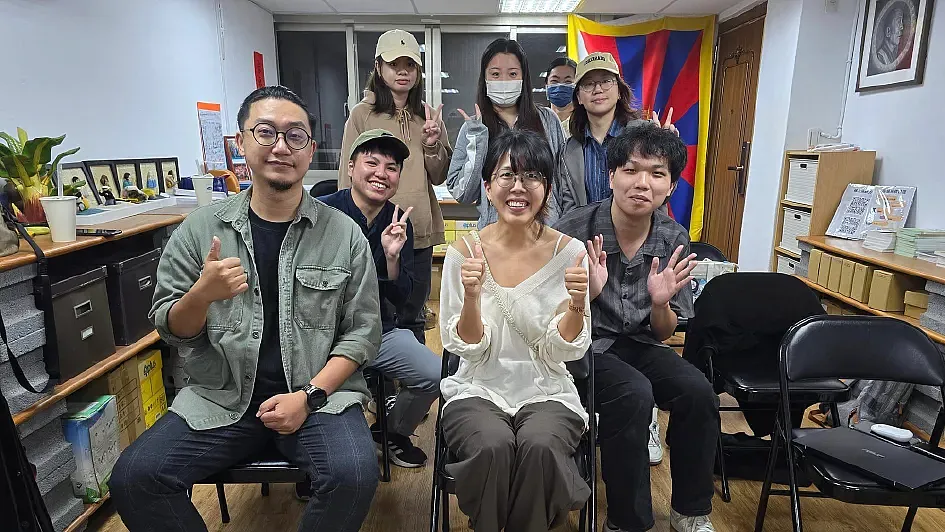
In the public imagination, the Constitution often seems very far removed from our daily lives, and "Grand Justices" appear to be aloof and unreachable figures. Yet, in reality, many of Taiwan's crucial human rights protection interpretations stem from the constitutional interpretation rulings of the Grand Justices! In this session, we invited Wang Ting-yü, a well-known lecturer and former chief editor of the "Plain Law Movement" website, to provide an in-depth analysis and lift the veil of mystery surrounding the "Constitution and the Grand Justices."
At the very beginning of the lecture, the speaker posed a vivid and engaging question: "Did you know that the monthly salary for a Grand Justice reaches as high as 200,000 NTD? What on earth are they busy with?" Through this question, the audience was guided to further ponder:
“What exactly do the duties and powers of the Grand Justices entail? What kind of responsibilities and missions do they shoulder? And how do these seemingly esoteric constitutional interpretation results affect the lives and rights of every single one of us?”
The Appointment System and Powers of the Grand Justices
Discussing the Grand Justices requires starting with how they come to office and what their work entails. Grand Justices are nominated by the President and appointed with the consent of the Legislative Yuan. Whether they possess the proper qualifications and suitability is vetted by the legislators based on their statutory powers.
Various Grand Justice interpretations and constitutional judgments are essentially proof of the Grand Justices' work, achieving judicial fairness and justice by striking down unreasonable regulations—a power vested in the Grand Justices by the Constitution. Laws have a hierarchy, which can be likened to a pyramid: the Constitution is at the very top, followed by statutes, and finally administrative orders. From this, we can see that the Constitution serves as the guiding benchmark for all laws, and Grand Justices enjoy a position of trust under the Constitution, entrusted with the heavy responsibility of interpreting it.
The Grand Justices and Human Rights Protection
What have the Grand Justices actually accomplished? Let us look back through the history of Taiwan's democratic constitutional development. For example, J.Y. Interpretation No. 261 required members of the first-term central representative bodies to cease exercising their powers by the end of 1991 and called for a full re-election of those bodies, ending the anomaly of the so-called "ten-thousand-year legislature."
If the interpretation on the "ten-thousand-year legislature" seems too distant from our lives today, consider rulings that touch everyday life: police may not conduct random stops and checks at will (J.Y. Interpretation No. 535); the National Health Insurance research database (Constitutional Court Judgment 111-Hsien-Pan-13 (2022)); compulsory fingerprinting as a violation of privacy (J.Y. Interpretation No. 603); provisions of the Act for Eliminating Hoodlums held unconstitutional (J.Y. Interpretation No. 636); and freedom of marriage for same-sex couples (J.Y. Interpretation No. 748). Because the Grand Justices declared these measures unconstitutional, the government must now have specific grounds when it restricts people's rights, and laws restricting rights must respect constitutional principles such as legal reservation, clarity, equality, and proportionality.
The Harm Done by the Amendment to the Constitutional Court Procedure Act
Having explained the Grand Justices' work, the speaker posed another question: "Under the latest amendment, are the Grand Justices about to be out of a job?"
To answer this, we first need to know how many Grand Justices are now serving: eight. Under the current rules, a constitutional ruling requires the attendance of two-thirds of the sitting Grand Justices and the concurrence of a majority of those present. The latest amendment, however, would require at least ten Grand Justices to attend and a two-thirds majority to concur.
At first glance, this might seem to make the Grand Justices' rulings more careful. But with only eight Grand Justices now in office, the Court could not even meet the attendance threshold if the amendment took effect.
“Nearly 90 percent of the cases the Grand Justices handle are constitutional petitions filed by ordinary people. If the new thresholds bring these cases to a halt, we will be the ones who suffer most. Is that the outcome we want?”
The draft may have been motivated by the view that the attendance and voting thresholds are too low, and that a court of at most 15 Grand Justices should not too easily strike down laws passed by 113 legislators. But we must not forget that constitutional review is an institution established by the Constitution itself, and the Grand Justices take office only after nomination by the President and confirmation by the Legislative Yuan, which gives them their own democratic legitimacy. The difference in numbers between the Grand Justices and the legislators is no reason to change the law at will. Raising the thresholds will only leave many people with nowhere to turn and repeat the regrets of history.
Finally, the speaker reminded the audience that, over the course of Taiwan's human rights history, the Grand Justices have built many legal safety nets and devoted great effort to them. This draft amendment to the Constitutional Court Procedure Act raises serious concerns; it should be fully debated and revised, not rushed through.
This article is an AI-generated translation of the original Chinese text. In the event of any discrepancy, the Chinese version shall prevail.
